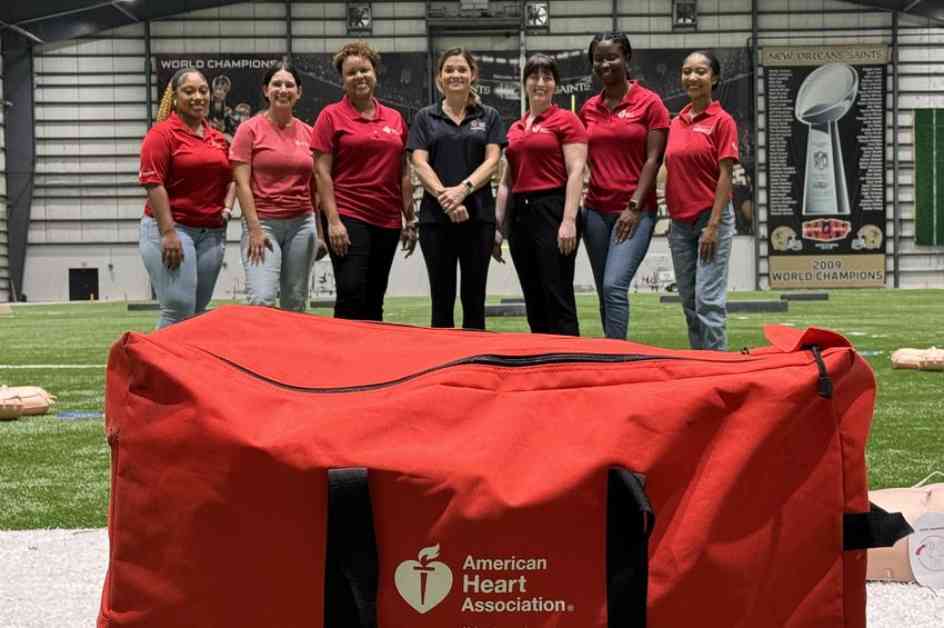
The American Heart Association and the New Orleans Saints have joined forces to provide critical Hands-Only CPR training to youth and high school coaches in Louisiana and Mississippi. This lifesaving skill is essential for coaches to have in case of a cardiac emergency on the field. The recent training session, held during the New Orleans Saints/USA Football Coaches Certification Clinic as part of the NFL’s Play Football Month, saw almost 200 coaches learn how to perform Hands-Only CPR and use an AED.
Collaboration for a Healthier Community
The partnership between the American Heart Association and the New Orleans Saints showcases a commitment to promoting health and safety in the community. By equipping coaches with the skills to respond effectively in emergency situations, lives can be saved. Elicia Broussard Sheridan, Saints Vice President of Community Relations and Youth Sports Development, emphasized the importance of timely action in critical moments. She highlighted the significance of coaches being properly trained to provide support until professional medical assistance arrives, ensuring the best possible outcome for the individual in need.
Legislative Support for CPR Training
In a significant development, the American Heart Association, the National Football League, the New Orleans Saints, and Acadian Ambulance collaborated to establish “The Kids and Coaches Cardiovascular Coalition of Louisiana.” This coalition worked alongside Senator Bill Wheat to pass SB54, a bill requiring Louisiana high school athletic coaches to undergo training and maintain certification in CPR, AED, and First Aid. This legislative initiative underscores the importance of preparedness and swift action in sports-related emergencies.
Empowering Coaches and Players
The Hands-Only CPR training provided to coaches and players is a vital skill that can significantly increase a person’s chances of survival in the event of cardiac arrest. With approximately 23,000 children under 18 experiencing cardiac arrest outside of a hospital each year in the United States, the need for preparedness in sports settings is evident. By ensuring that coaches and players are equipped with the knowledge and skills to respond effectively, lives can be saved on the field.
Compression-only CPR, also known as Hands-Only CPR, has been recognized as an effective technique in the initial minutes following a cardiac emergency. This skill is simple to learn and can be performed by anyone who witnesses a sudden collapse. By calling 911 and administering chest compressions, individuals can make a difference and potentially save a life. The American Heart Association emphasizes the importance of empowering people through training sessions like the one conducted for coaches, as it enables them to take action and provide critical support in emergencies.
The collaboration between the American Heart Association and the New Orleans Saints exemplifies a proactive approach to promoting health and safety within the community. By equipping coaches with the necessary skills and knowledge to respond effectively in emergency situations, lives can be saved. The Hands-Only CPR training provided during the recent session underscores the importance of preparedness and swift action in sports-related emergencies. Through legislative support and partnerships with key stakeholders, initiatives like the “Kids and Coaches Cardiovascular Coalition of Louisiana” are driving positive change and ensuring that coaches and players are well-prepared to handle cardiac emergencies on the field.