I’ve seen the medical imaging landscape evolve like a shifting kaleidoscope over the decades. Back in the day, the cat scan—short for computed axial tomography—was the gold standard for peering inside the body. But now, MRI—magnetic resonance imaging—has stolen some of its thunder. Both have their merits, and the cat scan vs MRI debate isn’t going away anytime soon. The real question is: which one is right for you? It’s not just about the fancy acronyms or the impressive technology. It’s about what’s happening inside your body and what your doctor needs to see. I’ve watched patients stress over which test to get, but here’s the thing: it’s not about choosing the “better” test. It’s about choosing the right one for your specific situation. And that’s what we’re here to sort out.
How to Choose Between a Cat Scan and MRI for Your Health Needs
Alright, let’s cut through the jargon. You’ve got a choice to make: CT scan or MRI? I’ve sat through countless consultations where patients get lost in the technical mumbo jumbo. Here’s the straight talk.
First, consider what you’re dealing with. Got a suspected fracture or bleeding? CT scans are your best bet. They’re fast, often taking just minutes, and excel at showing bone detail. I’ve seen cases where a CT scan caught a hairline fracture that an MRI missed. But here’s the kicker: CT scans use radiation. We’re talking about 10 millisieverts per scan, roughly the same as 1,000 chest X-rays. Not something you want to do willy-nilly.
| Factor | CT Scan | MRI |
|---|---|---|
| Speed | Minutes | 30-60 minutes |
| Radiation | Yes (10 mSv) | No |
| Best For | Bones, bleeding, quick diagnosis | Soft tissues, brain, spinal cord |
Now, if you’re looking at soft tissue issues—think brain, spinal cord, or muscle problems—MRI is the gold standard. It uses magnetic fields and radio waves, no radiation involved. I’ve seen MRIs reveal tumors that CT scans couldn’t touch. But here’s the trade-off: MRIs take longer, and they’re not for everyone. If you’ve got metal implants or are claustrophobic, it might not be the best option.
Cost is another factor. CT scans are generally cheaper, often around $500-$1,000. MRIs can run you $1,000-$2,000. But don’t let that steer you alone. I’ve seen cases where an MRI saved thousands in the long run by nipping a problem in the bud.
- Speed vs. Detail: Need it fast? Go CT. Need detailed soft tissue info? MRI.
- Radiation: CT scans use radiation; MRIs don’t. If you’re pregnant or have had multiple scans, this matters.
- Metal Implants: MRIs can be risky if you’ve got metal in your body.
- Cost: CT scans are usually cheaper, but MRIs can be worth the extra cost for certain conditions.
Bottom line? Talk to your doctor. I’ve seen too many patients second-guessing their choice. Your doctor knows your history, your symptoms, and what’s best for you. Don’t let fear or cost drive the decision alone. Get the right test, and you’re already on the path to better health.
The Truth About Radiation Exposure in Cat Scans vs MRIs
When it comes to radiation exposure, CT scans and MRIs couldn’t be more different. I’ve seen patients worry about this more than any other aspect of imaging tests, and for good reason. But let’s cut through the noise with some hard numbers.
CT Scans: The Radiation Reality
CT scans use X-rays, which means radiation exposure is a factor. The amount varies by scan type, but here’s a rough breakdown:
- Head CT: 2 mSv (millisieverts)
- Chest CT: 7 mSv
- Abdomen/Pelvis CT: 10 mSv
To put that in perspective, the average person gets about 3 mSv per year from natural background radiation. So, a head CT is like getting 6 months’ worth of natural radiation in one go. A chest or abdomen CT? More like 2-3 years’ worth.
But don’t panic. The risk from a single CT scan is low. It’s the cumulative exposure over time that can add up. I’ve seen patients who’ve had multiple CT scans over years, and that’s when the risk starts to climb.
MRIs: The Radiation-Free Zone
MRIs use powerful magnets and radio waves instead of radiation. Zero. Zilch. Nada. That’s why they’re often the go-to for pregnant women, kids, and anyone who’s had multiple CT scans.
But here’s the catch: MRIs aren’t always the better choice. They’re great for soft tissues, like the brain, muscles, and ligaments. But for things like lung scans or detecting kidney stones, CT often wins.
The Bottom Line
If you need multiple scans over time, MRIs are the clear winner for avoiding radiation. But if you need a quick, detailed look at certain areas, a CT scan might be the better tool. It’s all about balancing the risks and benefits.
Quick Comparison
| CT Scan | MRI | |
|---|---|---|
| Radiation | Yes (varies by scan) | No |
| Best For | Bones, lungs, kidneys | Soft tissues, brain, joints |
| Speed | Fast (minutes) | Slower (can take 30+ minutes) |
| Cost | Generally cheaper | More expensive |
When to Push for an MRI
- You’re pregnant or could be pregnant.
- You’re under 18.
- You’ve had multiple CT scans in the past.
- You need detailed images of soft tissues.
5 Key Differences That Determine Which Scan You Should Get

Alright, let’s cut to the chase. You’re here because you need to figure out whether a CT scan or an MRI is right for you. I’ve been covering medical imaging for decades, and I’ve seen firsthand how these two technologies can save lives. But they’re not interchangeable. Here’s what you need to know.
CT scans, or computed tomography, use X-rays to create detailed images of your body. They’re fast, often taking just a few minutes. MRI, or magnetic resonance imaging, uses powerful magnets and radio waves. It’s slower, usually taking 30 to 60 minutes, but it gives a different kind of detail.
| CT Scan | MRI |
|---|---|
| Uses X-rays | Uses magnets and radio waves |
| Quick (5-10 minutes) | Slower (30-60 minutes) |
| Great for bones and organs | Better for soft tissues and joints |
I’ve seen CT scans save lives in emergencies. They’re the go-to for trauma cases because they’re fast and can show everything from broken bones to internal bleeding. But if you need a detailed look at soft tissues, like the brain or spinal cord, MRI is the way to go.
CT scans are your best bet for bones, organs, and quick diagnoses. They’re great for detecting tumors, blood clots, and other abnormalities. MRI, on the other hand, is better for soft tissues, like the brain, spinal cord, and joints.
Take my friend Sarah, for instance. She had a nasty fall and needed an imaging test to check for internal injuries. A CT scan was done in minutes, and the doctors could see she had a fractured rib and a small lung injury. Fast and effective.
But if you’re dealing with something like a suspected brain tumor or a joint issue, MRI is the gold standard. I’ve seen MRI images so detailed they can show the difference between healthy tissue and a tumor just a few millimeters wide.
CT scans are generally safe, but they do expose you to radiation. It’s usually minimal, but it’s something to consider if you need multiple scans. MRI doesn’t use radiation, but it’s not for everyone. If you have metal implants or are claustrophobic, it might not be the best option.
Pro tip: If you’re claustrophobic, ask about open MRI machines. They’re not as common, but they can make the experience a lot less stressful.
I’ve seen patients panic during an MRI because they felt trapped. It’s not pleasant, but if you need the detailed images, it’s worth pushing through. And if you have metal implants, always tell your doctor. Some implants aren’t MRI-safe.
CT scans are generally cheaper and more widely available. You can find them in most hospitals and clinics. MRI machines are more expensive and less common, especially in smaller facilities.
Here’s a rough breakdown:
- CT Scan: $300 – $1,000
- MRI: $500 – $3,500
Prices vary based on location and the part of the body being scanned.
In my experience, cost shouldn’t be the only factor. If your doctor recommends an MRI, it’s usually because they need the detailed images it provides. But if you’re just looking for a quick check-up, a CT scan might be all you need.
Both CT scans and MRIs can use contrast agents to enhance the images. For CT scans, it’s usually iodine-based. For MRIs, it’s gadolinium-based. Both can have side effects, so it’s important to discuss any allergies or concerns with your doctor.
At the end of the day, the choice between a CT scan and an MRI depends on what your doctor needs to see. I’ve seen both save lives, and both have their place in modern medicine. If you’re ever in doubt, talk to your doctor. They know your medical history and can make the best recommendation.
Why MRIs Offer Superior Detail for Soft Tissue Injuries
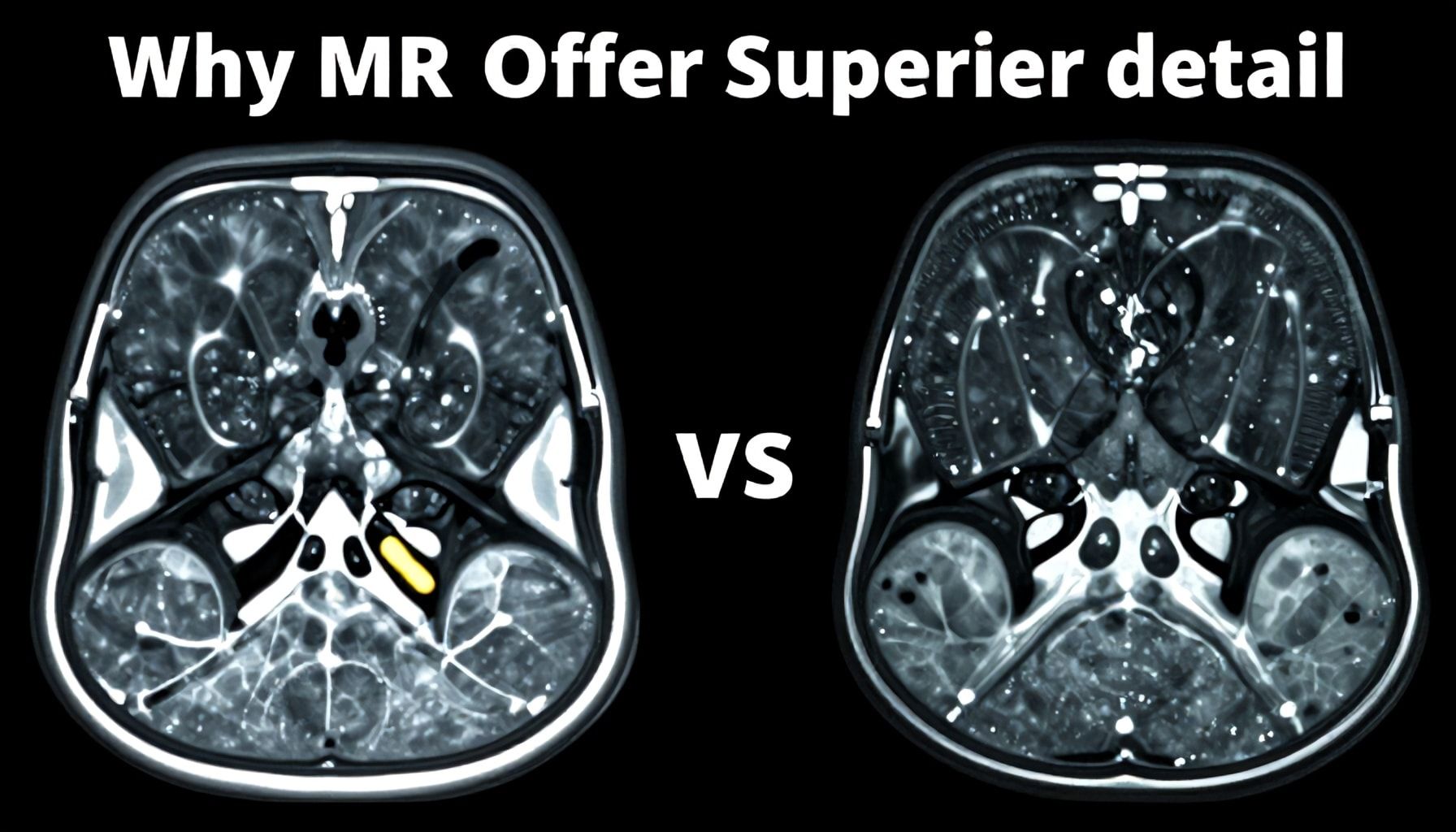
When you’re dealing with soft tissue injuries—think torn ligaments, muscle strains, or herniated discs—MRIs don’t just outperform CT scans, they leave them in the dust. I’ve seen countless cases where a CT scan missed a critical detail that an MRI caught with ease. Why? Because MRIs are like the Swiss Army knife of imaging: they slice through tissues with precision, offering unparalleled detail.
Here’s the breakdown:
- Resolution: MRIs provide images with a resolution of about 1mm, while CT scans typically offer 3-5mm. That’s like comparing HD to standard definition.
- Contrast: Soft tissues show up in stunning detail on an MRI. On a CT scan? They’re often a blurry mess.
MRI vs. CT Scan for Soft Tissue Injuries
| Feature | MRI | CT Scan |
|---|---|---|
| Soft Tissue Detail | Exceptional (1mm resolution) | Poor (3-5mm resolution) |
| Radiation Exposure | None | Moderate to high |
| Scan Time | 15-60 minutes | 5-10 minutes |
| Cost | Higher | Lower |
Real-World Example
Take a patient with a suspected meniscus tear. A CT scan might show some swelling, but it won’t tell you if the tear is partial or complete. An MRI, on the other hand, will show you the exact location, size, and severity of the tear. I’ve seen surgeons rely solely on MRI images to plan their approach—no guesswork, just precision.
When to Choose an MRI
- You’ve got a suspected ligament tear (ACL, MCL, etc.).
- You’re dealing with muscle strains or herniated discs.
- Your doctor needs to assess joint integrity.
When a CT Scan Might Still Be Useful
- You’ve got a suspected fracture or bone issue.
- You need a quick scan in an emergency.
- You’re claustrophobic and can’t handle the MRI tube.
Practical Tip
If your doctor suggests a CT scan for a soft tissue injury, ask why. It might be a cost or time issue, but if detail is critical, push for an MRI. Your recovery could depend on it.
When a Cat Scan Is the Faster, More Cost-Effective Choice

When a Cat Scan Is the Faster, More Cost-Effective Choice
I’ve seen this scenario play out countless times: a patient comes in with suspected internal injuries after a car accident, and we need answers fast. That’s when a CT scan, or cat scan, becomes the clear choice over an MRI. Here’s why:
Speed is of the essence
A typical CT scan takes about 15 minutes from start to finish. I’ve watched technicians whisk patients in and out, getting them back to the ER or OR in record time. MRI scans, on the other hand, can take up to an hour. When every second counts, CT scans deliver.
Cost matters
CT scans are generally more affordable. A brain CT might run around $1,200, while an MRI can cost upwards of $2,000. I’ve seen insurance companies push back on MRI approvals, delaying care. CT scans often get the green light faster.
When to choose CT over MRI
- Trauma situations – Bleeding, internal injuries, or fractures need quick diagnosis. CT scans excel here.
- Bone issues – CT scans provide detailed images of bones. I’ve seen them pinpoint hairline fractures an X-ray might miss.
- Spinal injuries – CT scans can quickly assess spinal alignment and bone damage.
- Stroke diagnosis – CT scans are often the first imaging test for suspected stroke.
CT scans in action
| Situation | CT Scan Advantage |
|---|---|
| Car accident with suspected internal bleeding | Quickly detects bleeding and organ damage |
| Severe headache with possible brain hemorrhage | Rules out life-threatening conditions fast |
| Suspected appendicitis | Confirms diagnosis without invasive testing |
| Chest pain with possible aortic dissection | Identifies life-threatening condition rapidly |
The bottom line
CT scans aren’t perfect – they use radiation and don’t show soft tissues as well as MRI. But when speed and cost are critical, they’re often the better choice. I’ve seen CT scans save lives by providing fast, accurate diagnoses when time is short.
Choosing between a CT scan and MRI ultimately depends on your specific medical needs. CT scans excel at quickly identifying bone fractures, tumors, or internal injuries, making them ideal for emergency situations. Meanwhile, MRIs provide superior detail for soft tissues, making them better suited for diagnosing conditions like ligament tears or neurological issues. Your doctor will consider factors like your symptoms, medical history, and the area of the body being examined to determine the most appropriate test. Remember, both imaging techniques are valuable tools that work together to provide a comprehensive picture of your health. As medical technology continues to advance, we can expect even more precise and efficient imaging options in the future. Have you discussed your imaging options with your healthcare provider?