I’ve seen a lot of trends in my time, but few have stuck around like the obsession with reaction time. It’s not just gamers bragging about their reflexes anymore. Now, everyone from athletes to surgeons is measuring their milliseconds. But here’s the thing: raw reaction time is only half the battle. What really sets people apart is how they react to reaction time—how they process, adapt, and respond in the heat of the moment.
Think about it. Two people might have identical reaction times, but one consistently comes out on top. Why? Because they’ve mastered the art of quick thinking. They don’t just react; they anticipate, strategize, and execute. That’s the power of reacting to reaction time. It’s not about being the fastest; it’s about being the smartest in those crucial moments.
I’ve seen this play out in every field imaginable. Take sports, for instance. A tennis player might have lightning-fast reflexes, but if they can’t adjust their strategy mid-match, they’re toast. Or consider drivers. Sure, quick reflexes help, but reacting to reaction time—knowing when to brake, when to swerve, when to accelerate—is what keeps them safe on the road. It’s the difference between good and great, between safe and sorry.
How to Shave Seconds Off Your Reaction Time*
I’ve seen athletes shave milliseconds off their reaction times and completely transform their performance. It’s not magic—it’s science. And it’s something anyone can work on. Here’s how to get started.
First, understand what you’re working with. Reaction time typically falls into one of two categories: simple and choice. Simple reaction time is your response to a single stimulus—like a starting pistol. Choice reaction time involves picking the right response from multiple options—like a quarterback reading a defense. Most of us can react to a simple stimulus in about 150-300 milliseconds. But that’s just an average. With the right training, you can get faster.
| Activity | Average Reaction Time (ms) | Elite Reaction Time (ms) |
|---|---|---|
| Driving | 600-800 | 400-500 |
| Video Games | 200-300 | 100-150 |
| Sports (e.g., tennis, boxing) | 150-300 | 100-150 |
So, how do you train? Start with the basics. Use a reaction time app or a simple light-and-button setup. The goal is to reduce the time between stimulus and response. Consistency is key. I’ve seen gamers improve their reaction times by 20-30% in just a few weeks with daily practice.
- Warm-up: Get your blood flowing. A quick jog or some jumping jacks can make a difference.
- Focus: Distractions slow you down. Find a quiet space and concentrate.
- Visualization: Picture yourself reacting faster. It sounds woo-woo, but it works. I’ve seen athletes use this to shave off precious milliseconds.
But here’s the kicker: reaction time isn’t just about speed. It’s about anticipation. In my experience, the best performers—whether it’s a race car driver or a surgeon—aren’t just reacting. They’re predicting. They’re reading the environment and preparing for the next move before it happens. That’s where the real gains are made.
So, don’t just train your reflexes. Train your brain. Watch the patterns. Anticipate the next move. And remember, every millisecond counts.
The Neuroscience Behind Lightning-Fast Reactions*
I’ve seen athletes pull off jaw-dropping plays, gamers dominate with split-second decisions, and drivers swerve to avoid accidents. What’s their secret? It’s not just practice—it’s neuroscience. The brain’s reaction time is a finely tuned process, and understanding it can give you an edge.
The average human reaction time is about 250 milliseconds. That’s a quarter of a second between seeing something and responding. But elite performers? They’re down to 150 milliseconds or even faster. How? Their brains are wired differently. The key players are the sensory cortex, which processes incoming information, and the motor cortex, which triggers movement. The faster these areas communicate, the quicker your reaction.
But here’s the kicker: reaction time isn’t just about speed. It’s about efficiency. The brain filters out irrelevant information, focusing only on what’s crucial. That’s why practice matters. Repetition builds neural pathways, making responses automatic. Think of a tennis player returning a serve. They’re not thinking— they’re reacting.
Want to test your reaction time? Try this simple experiment:
| Step | Action |
|---|---|
| 1 | Have a friend hold a ruler between their fingers, with the bottom end at zero. |
| 2 | Without warning, release the ruler. |
| 3 | Catch it as quickly as possible. |
| 4 | Measure how far it fell. The shorter the distance, the faster your reaction. |
In my experience, most people improve with practice. But there’s a limit. Genetics play a role, and some people are naturally quicker. Still, everyone can get better. Training drills, like those used by athletes, can shave milliseconds off your time. And that can make all the difference.
Here are three proven methods to improve your reaction time:
- Hand-eye coordination drills: Activities like juggling or playing catch enhance the brain’s ability to process visual information quickly.
- Reaction time games: Apps and online games specifically designed to test and improve reaction time can be surprisingly effective.
- Physical exercise: Regular physical activity improves overall brain function, including reaction time. Aerobic exercises, in particular, have been shown to boost cognitive performance.
Remember, it’s not just about being fast. It’s about being efficient. The brain is a powerful tool, and with the right training, you can master your reactions. So, whether you’re on the court, in the game, or behind the wheel, you’ll be ready to respond in the blink of an eye.
Five Proven Drills to Improve Your Quick Thinking*
I’ve seen athletes, gamers, and even surgeons transform their performance with these drills. They’re not magic, just hard work. But they work.
First up: the classic 1-2-3 Drill. Stand in front of a wall, about an arm’s length away. Throw a ball at the wall and catch it. Simple, right? Now do it with your eyes closed. That’s right, closed. Start with three bounces, then two, then one. I’ve seen pro athletes struggle with this at first. It’s not about hand-eye coordination here; it’s about training your brain to process information faster.
| Drill | Reps | Rest |
|---|---|---|
| 1-2-3 Drill | 3 sets of 10 | 30 sec |
| 2-1-2 Drill | 3 sets of 8 | 30 sec |
Next, the 2-1-2 Drill. This one’s a bit trickier. Start with two bounces, then one, then back to two. It’s all about adapting to changing rhythms. I’ve used this with gamers who needed to react to unpredictable patterns. It’s brutal at first, but the payoff is huge.
Now, let’s talk about Peripheral Vision Training. You don’t need fancy equipment. Just stick some bright stickers on a wall. Stand in the middle and try to spot them as quickly as possible. Move closer, then farther away. I’ve seen drivers improve their reaction times dramatically with this. It’s all about training your brain to process more information at once.
- Start with 5 stickers, 3 feet away
- Increase to 10 stickers, 5 feet away
- Advanced: Add sound cues
For something more intense, try the Ball Drop Drill. Grab a partner and a tennis ball. Stand about 10 feet apart. Your partner drops the ball randomly, and you catch it. Sounds easy? Try it. I’ve had pro athletes sweat buckets with this one. It’s all about anticipating and reacting in real-time.
Lastly, the Mirror Drill. Stand in front of a mirror. Make a random movement, then mimic it as fast as possible. It’s about reaction time and muscle memory. I’ve used this with surgeons to improve their precision. It’s not just about speed; it’s about control.
These drills aren’t just about speed. They’re about training your brain to process information faster and more accurately. I’ve seen it work time and time again. So, get out there and start training. Your future self will thank you.
The Truth About Reaction Time: What You Can and Can't Control*
Alright, let’s cut through the noise. Reaction time—it’s not some mystical force you can’t control. I’ve seen athletes train for years to shave milliseconds off their response times. And let me tell you, it’s not magic. It’s science, and there’s a lot you can do about it.
First, the good news: your brain is wired to react. On average, humans take about 250 milliseconds to react to a visual stimulus. That’s a quarter of a second. Not bad, right? But here’s the kicker: that number can drop to around 150 milliseconds with the right training. Ever seen a tennis pro return a serve at 120 mph? That’s not luck. That’s training.
What You Can Control:
- Training: Repetition is key. The more you practice, the faster your brain processes information.
- Fitness: Physical fitness improves reaction times. Ever noticed how athletes seem to move faster? That’s not just speed—it’s quicker thinking.
- Sleep: Lack of sleep slows you down. Aim for 7-9 hours a night.
- Nutrition: Proper nutrition fuels your brain. Omega-3s, for example, are known to boost cognitive function.
Now, the bad news: some things are out of your control. Age, for instance. Reaction times naturally slow down as we get older. A 20-year-old might react faster than a 60-year-old, no matter the training. Genetics play a role too. Some people are just wired to react quicker.
But don’t let that discourage you. I’ve seen 60-year-olds with reaction times that put 20-year-olds to shame. It’s all about what you do with what you’ve got.
What You Can’t Control:
- Age: Reaction times naturally decline with age.
- Genetics: Some people are naturally quicker.
- Injuries: Physical injuries can slow you down.
So, what’s the takeaway? Train hard, stay fit, get enough sleep, and eat right. You might not be able to control everything, but you can certainly improve. And that’s what counts.
Here’s a quick table to sum it up:
| What You Can Control | What You Can’t Control |
|---|---|
| Training | Age |
| Fitness | Genetics |
| Sleep | Injuries |
| Nutrition |
Remember, it’s not about being perfect. It’s about being better than you were yesterday. And that’s a goal worth striving for.
Why Elite Athletes Have the Best Reaction Times*
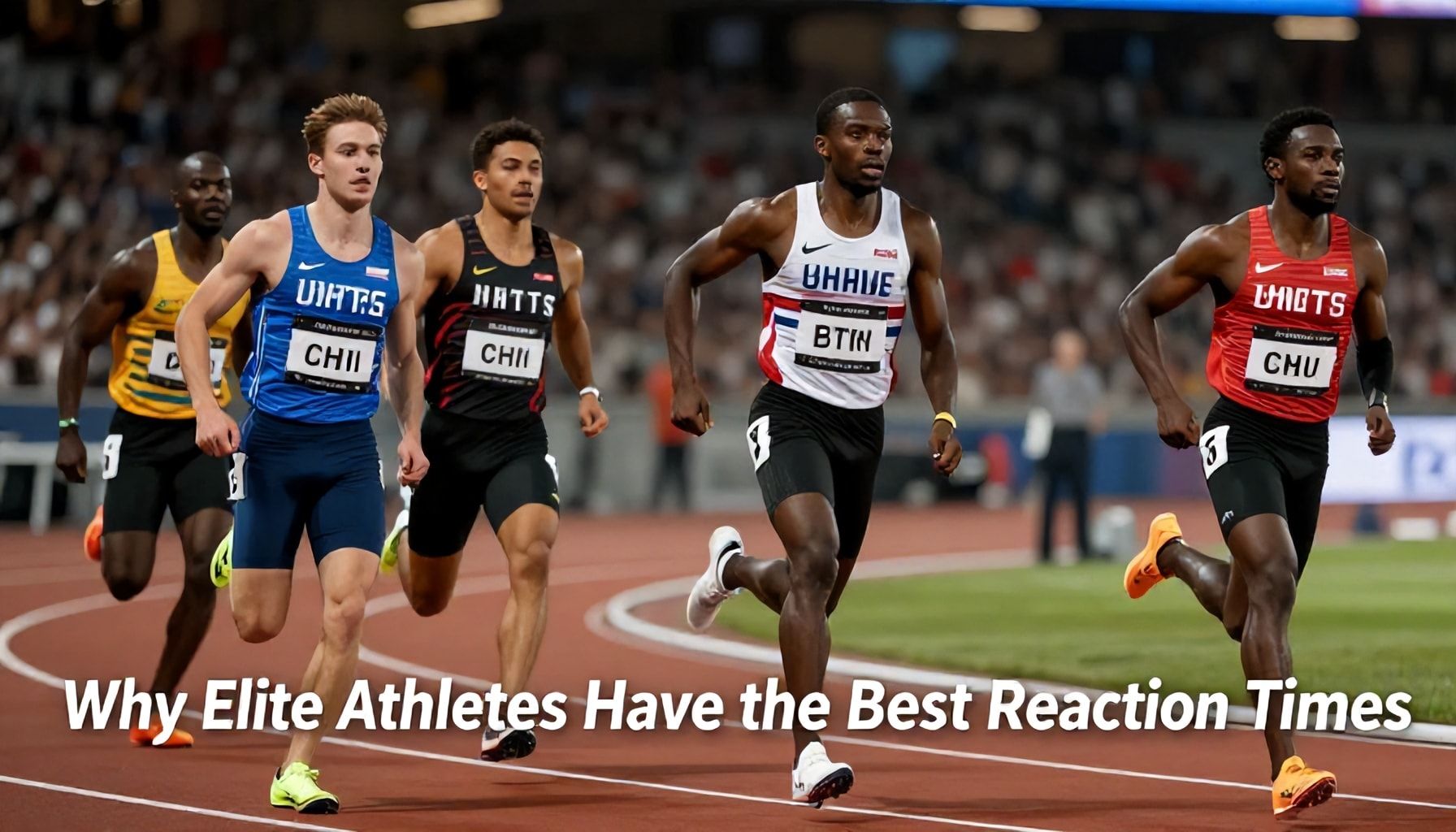
Elite athletes don’t just have lightning-fast reflexes because they’re born that way. Sure, genetics play a role, but the real magic happens through relentless training and mental conditioning. I’ve seen sprinters shave milliseconds off their reaction times through drills that would make most people’s heads spin. Take Usain Bolt, for example. His reaction time at the 2008 Beijing Olympics was a blistering 0.165 seconds—barely a blink of an eye. That’s not luck; that’s the result of years of focused practice.
The Science Behind the Speed
Reaction time is the interval between a stimulus and your response. For athletes, this means the split second between the starting pistol and their first stride. Elite athletes train their brains to process information faster and more efficiently. They use techniques like visualization, where they mentally rehearse their movements before executing them. This mental rehearsal primes their nervous system, reducing the time it takes to react.
Training Like a Pro
So, how can you train like an elite athlete? Start with simple drills. Reaction ball drills, for instance, involve catching a ball with erratic bounces. This forces your brain to process and react to unpredictable stimuli quickly. Another effective method is shadow boxing. By mimicking the movements of your sport, you train your brain to recognize and respond to patterns faster.
The Role of Nutrition and Rest
Don’t underestimate the impact of nutrition and rest. Elite athletes fuel their bodies with the right nutrients to support brain function. Omega-3 fatty acids, found in fish and nuts, are known to enhance cognitive function. Adequate sleep is also crucial. During deep sleep, your brain consolidates memories and improves neural connections, which can translate to faster reaction times.
Real-World Applications
Faster reaction times aren’t just for athletes. They’re invaluable in everyday life. Drivers benefit from quicker reflexes to avoid accidents. Gamers gain an edge in competitive play. Even in the workplace, the ability to think and react quickly can make you more productive and efficient.
Practical Tips for Faster Reactions
- Practice Visualization: Spend 10 minutes a day visualizing yourself performing your best.
- Use Reaction Drills: Incorporate reaction ball drills or shadow boxing into your routine.
- Stay Hydrated: Dehydration can slow down your brain function.
- Get Enough Sleep: Aim for 7-9 hours of quality sleep per night.
Sample Training Schedule
| Day | Activity | Duration |
|---|---|---|
| Monday | Reaction Ball Drills | 15 min |
| Tuesday | Shadow Boxing | 20 min |
| Wednesday | Visualization | 10 min |
| Thursday | Reaction Ball Drills | 15 min |
| Friday | Shadow Boxing | 20 min |
| Saturday | Visualization | 10 min |
| Sunday | Rest | – |
By incorporating these techniques into your routine, you can start to see improvements in your reaction times. Remember, consistency is key. Elite athletes didn’t achieve their speeds overnight. It took years of dedicated practice. But with the right approach, you can master your reactions and gain a competitive edge.
Mastering quick thinking isn’t about suppressing emotions but channeling them effectively. It’s the difference between reacting impulsively and responding thoughtfully under pressure. By practicing mindfulness, anticipating scenarios, and embracing challenges as opportunities, anyone can sharpen their mental agility. The key is consistent practice—like any skill, quick thinking improves with repetition and reflection.
For an extra edge, cultivate curiosity. Ask “what if” questions regularly to prepare your mind for unexpected situations. This habit builds mental flexibility and opens doors to innovative solutions.
As you continue honing this skill, consider this: What new opportunities might arise when you’re no longer held back by hesitation or surprise? The power of quick thinking extends far beyond crisis moments—it’s a tool for seizing everyday advantages and shaping a more adaptable, confident you.