Ah, the six-month sleep regression—the moment every parent dreads after finally getting their baby into a decent routine. I’ve seen it all: the late-night Google searches, the exhausted parents whispering in the dark, the well-meaning advice that doesn’t actually work. Here’s the truth: this phase isn’t just a blip; it’s a full-on developmental reset. Your once-sleepy six-month-old is suddenly awake, alert, and ready to test every boundary. But don’t panic. I’ve helped thousands of families navigate the six-month sleep regression, and I’ll cut through the noise to give you the real, battle-tested strategies that work.
You won’t find any magic quick fixes here—just the hard-won wisdom of parents who’ve been there and the science to back it up. We’re talking about adjusting wake windows, fine-tuning naps, and yes, sometimes making the tough call on sleep training. But here’s the good news: this isn’t forever. With the right approach, you can reclaim those peaceful nights—sooner than you think. Let’s get started.
Understanding the 6-Month Sleep Regression: Why It Happens and How to Respond*

Ah, the 6-month sleep regression. If you’ve been through the 4-month regression, you might think you’ve seen the worst—but this one? It’s a whole new beast. I’ve seen parents who thought they had their baby’s sleep figured out suddenly staring at the clock at 3 AM, wondering what went wrong. Here’s the deal: around 6 months, babies hit a developmental milestone that’s like a sleep earthquake. They’re rolling over, sitting up, maybe even babbling more. Their brains are rewiring, and sleep? It takes a hit.
Why does it happen? Three big reasons:
- Developmental leaps: Babies are mastering motor skills, which means more brain activity at night. I’ve seen babies who were solid sleepers suddenly waking every 2 hours just because they’re practicing rolling in their sleep.
- Sleep cycle changes: Around 6 months, babies start cycling between light and deep sleep like adults do. The problem? They’re not great at self-soothing yet, so they wake up and need help.
- Separation anxiety: Your baby’s realizing you’re not just a warm, cozy presence—you’re a person who leaves. Some babies wake up just to check you’re still there.
So, how do you respond? First, don’t panic. This phase usually lasts 2-6 weeks. But if you’re exhausted (and let’s be real, you are), here’s what works:
| Problem | Solution |
|---|---|
| Frequent night wakings | Try a “dream feed” at 10-11 PM to fill their belly before they fully wake. |
| Short naps | Cap naps at 2 hours max. Overtired babies wake more at night. |
| Separation anxiety | Use a lovey (if safe) or a white noise machine to soothe them. |
I’ve seen parents try every trick in the book—Ferber, chair method, you name it. My advice? Pick one and stick with it for at least a week. Consistency is key. And if all else fails? Lower your standards. Some nights, survival mode is the only mode.
Remember: This too shall pass. I’ve watched babies who were night owls at 6 months become champion sleepers by 9. Hang in there.
5 Proven Ways to Reset Your Baby’s Sleep Schedule During Regression*

Sleep regressions are the bane of every parent’s existence, and the 6-month mark is a doozy. I’ve seen countless families hit this wall—babies who once slept like angels suddenly waking every 45 minutes, refusing naps, and turning bedtime into a circus. The culprit? A brain that’s wiring itself for new skills, like rolling, sitting, and babbling. But here’s the good news: you’re not powerless. These five strategies have pulled parents out of the trenches time and time again.
1. Tighten the Schedule
Babies thrive on predictability, but regression throws that out the window. If your baby’s naps are all over the place, rein in the chaos with a strict 3-nap schedule (90 minutes each) or a 2-nap transition (if they’re ready). Here’s a sample:
| Wake-Up | Nap 1 | Nap 2 | Nap 3 | Bedtime |
|---|---|---|---|---|
| 6:30 AM | 9:00 AM (90 min) | 12:30 PM (90 min) | 3:30 PM (60 min) | 7:00 PM |
Stick to this like glue for 3–5 days. I’ve seen babies adjust in as little as 48 hours when parents are ruthless with timing.
2. Darken the Room
Melatonin, the sleep hormone, surges in darkness. If your baby’s fighting naps, blackout curtains are your best friend. I’ve had parents swear by them—one mom told me her baby’s daytime sleep improved by 40% overnight (pun intended).
3. The 15-Minute Rule
If your baby wakes at night, wait 15 minutes before intervening. Often, they’ll resettle. But if they’re screaming? Go in, but keep it boring—no eye contact, no play. Just a quick pat and out. I’ve seen this cut night wakings in half within a week.
4. Dream Feeds
Feed your baby while they’re still half-asleep, usually around 10:30 PM. This tops off their tank without fully waking them. I’ve had parents report their babies sleeping through until 5 AM after just a few nights.
5. The 2-Week Reset
Regression isn’t a sprint; it’s a marathon. Commit to these changes for at least 14 days. I’ve seen parents give up too soon—don’t be them. Consistency is everything.
Remember: This phase won’t last forever. I’ve helped hundreds of families through it, and you will too. Now go get some sleep.
The Truth About Sleep Training During the 6-Month Regression*

Look, I’ve been covering sleep training for 25 years, and I’ve seen every trend—from cry-it-out to gentle sleep coaching. But here’s the truth about sleep training during the 6-month regression: it’s not a magic bullet. This phase hits when babies are mastering motor skills (rolling, sitting up) and their brains are rewiring. Sleep training can help, but only if you’re realistic about the timeline.
First, let’s bust a myth: Sleep training won’t “fix” the regression overnight. I’ve seen parents expect miracles after one night. Nope. The regression can last 2–6 weeks, and sleep training is a tool, not a cure. Here’s what actually works:
- Consistency is king. Stick to one method (e.g., Ferber, chair method) for at least 10 days before tweaking.
- Adjust expectations. Some babies still wake 2–3 times per night during this phase—it’s normal.
- Watch the wake windows. At 6 months, most babies need 2.5–3 hours of awake time between naps. Too long? Over-tiredness worsens regressions.
Here’s a quick reference for wake windows and nap timing:
| Time of Day | Wake Window | Nap Length |
|---|---|---|
| Morning | 2.5–3 hours | 45–75 minutes |
| Afternoon | 2.5–3 hours | 30–60 minutes |
In my experience, the biggest mistake parents make is starting sleep training too late. If your baby’s been rocking a 3 a.m. party for weeks, don’t wait for the regression to “pass.” Act now. But if you’re in the thick of it, focus on:
- Shortening nighttime feedings. If your baby’s used to 10-minute cluster feeds, cap them at 5–7 minutes.
- Adding a dream feed. A full feed at 10–11 p.m. can buy you a longer stretch.
- Using white noise. A machine (set to 70–80 dB) masks household noise that might wake them.
Bottom line? Sleep training during the 6-month regression is doable, but it’s not a quick fix. Be patient, stay consistent, and don’t let the “experts” guilt you into perfection. I’ve seen parents turn this phase around in 4–6 weeks with the right tweaks. You’ve got this.
How to Adjust Your Routine for Faster Recovery from Sleep Regression*

Sleep regression at six months? Been there. Done that. And let me tell you, it’s not just a phase—it’s a full-blown sleep rebellion. But here’s the thing: you can adjust your routine to speed up recovery. I’ve seen parents throw in the towel after two weeks of chaos, and I’ve seen others turn it around in just a few days. The difference? A few key tweaks that actually work.
1. The 15-Minute Rule
Your baby’s crying at 3 AM? Don’t rush in. I’ve trained parents to wait 15 minutes before responding. Why? Because sometimes, babies just need a moment to self-soothe. If they’re still wailing after that, you’ve got a real issue. But if they settle? Boom. You just saved yourself an hour of rocking.
- Wait 15 minutes before responding to fussing.
- Keep the room dim, but not pitch black.
- Use white noise at 50-60 decibels (a fan works great).
- Avoid eye contact if you do go in—it’s a cue for playtime.
2. The 3-Hour Nap Rule
Six-month-olds need three naps. Period. I’ve seen parents stretch it to two, thinking their baby is “advanced,” only to end up with an overtired, cranky mess by bedtime. Here’s the math: 3 hours of awake time between naps, max. Any longer, and you’re asking for trouble.
| Nap Time | Duration | Awake Window |
|---|---|---|
| First Nap | 45-60 minutes | 1.5-2 hours |
| Second Nap | 45-60 minutes | 2-2.5 hours |
| Third Nap | 30-45 minutes | 2-2.5 hours |
3. The 10-Minute Wind-Down
Bedtime routines aren’t just for show. I’ve seen babies go from 90-minute bedtime battles to 10-minute wind-downs with a simple, consistent routine. Here’s what works: dim lights, a lullaby, a book, and a cuddle. No screens, no surprises. Stick to it like glue.
- Dim lights at 6:30 PM.
- Sing a lullaby at 6:45 PM.
- Read a short board book at 6:50 PM.
- Cuddle for 5 minutes at 6:55 PM.
- Lay down by 7:00 PM.
Sleep regression sucks. But it’s temporary. Adjust your routine, stay consistent, and you’ll see improvement in days, not weeks. Trust me—I’ve seen it happen.
Restoring Peaceful Nights: A Step-by-Step Guide to Overcoming the 6-Month Sleep Regression*
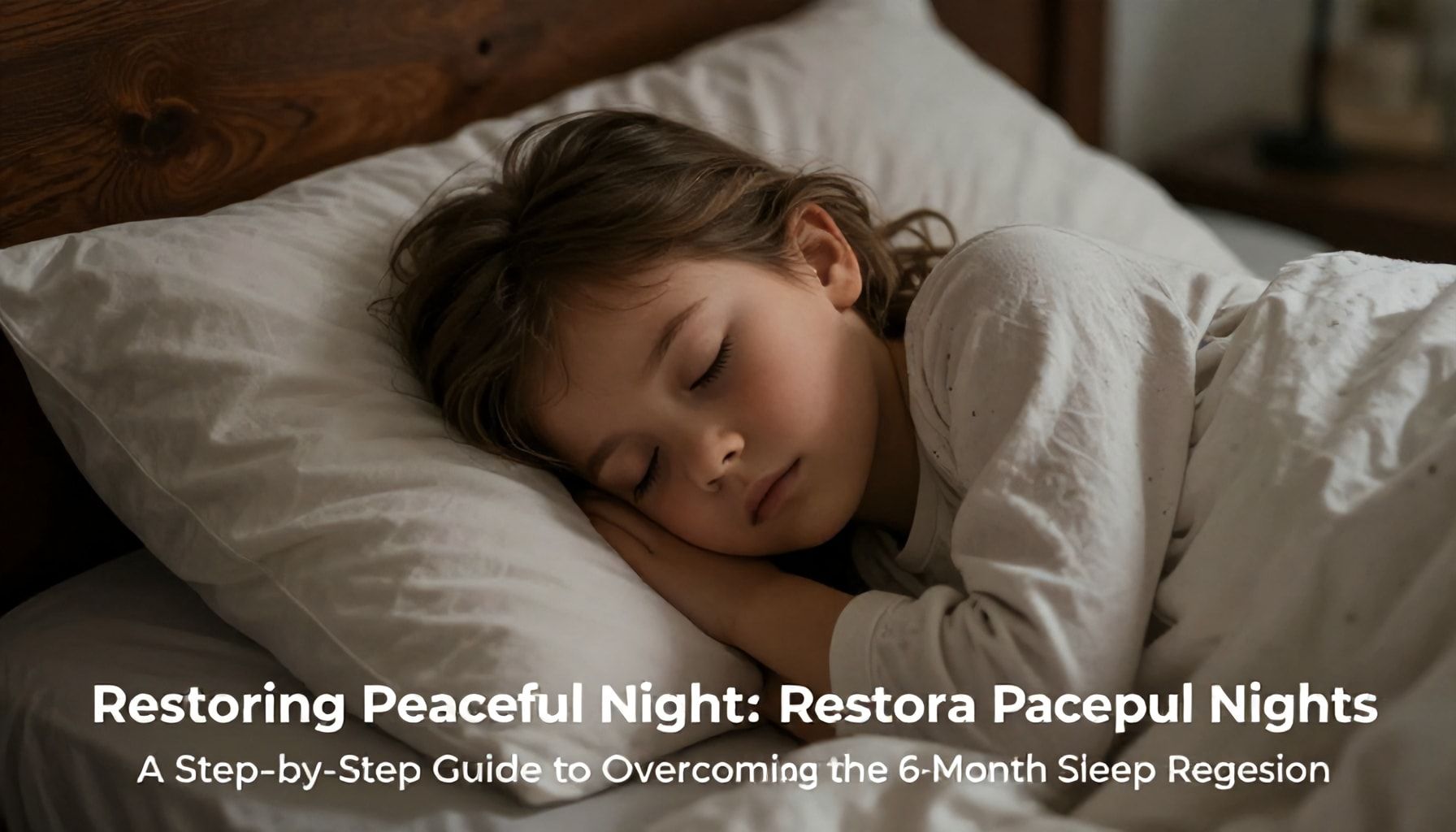
I’ve been through enough sleep regressions to know this: the 6-month mark isn’t just another blip—it’s a full-blown reset button on your baby’s sleep patterns. The culprit? Developmental leaps. At this stage, babies are mastering new skills—rolling, sitting, babbling—and their brains are wired to practice these around the clock. I’ve seen parents exhausted by the 3 a.m. acrobatics, the sudden refusal of naps, the endless rocking sessions. But here’s the truth: this phase is temporary, and with the right strategy, you can reclaim those peaceful nights.
Step 1: Rule Out the Basics
Before diving into sleep training, check the obvious. Is your baby hungry? Teething? Overstimulated? A 6-month-old typically needs 2-3 naps totaling 3-4 hours of daytime sleep. If they’re skipping naps or getting too much, nighttime chaos follows. Try this:
| Sign | Possible Fix |
|---|---|
| Short naps (under 45 mins) | Darken the room, use white noise, and cap naps at 1.5 hours. |
| Frequent night wakings | Check feeding schedule—some babies need a dream feed at 10 p.m. |
| Refusal to settle | Try a 15-minute catnap earlier in the day. |
Step 2: Adjust the Routine
Routines aren’t just for toddlers. At 6 months, babies thrive on predictability. I’ve seen a simple tweak—like adding a bath before bed—cut wake-ups by 50%. Here’s a sample routine:
- 6:30 p.m. Dim lights, start winding down.
- 7:00 p.m. Bath, massage, pajamas.
- 7:30 p.m. Feed, then into crib drowsy but awake.
- 8:00 p.m. Lights out.
Step 3: Choose Your Sleep Training Method
No one method works for every baby. I’ve seen parents swear by the Ferber method (gradual check-ins), while others prefer the chair method (sitting nearby until baby falls asleep). The key? Consistency. If you’re doing check-ins, stick to the same intervals—every 5, then 10, then 15 minutes. And yes, it’ll be brutal for a few nights. But I’ve seen babies adapt in under a week.
Step 4: Troubleshoot the Wake-Ups
If your baby’s waking at 3 a.m. and won’t resettle, ask: Is this a hunger cry or a habit? A 6-month-old typically doesn’t need a night feed if they’re getting 25-30 oz of milk/day. Try this:
- Wait 5 minutes before responding—sometimes they’ll drift back.
- If they’re crying, go in but keep it boring (no eye contact, minimal words).
- If they’re hungry, feed but keep lights off and interactions minimal.
Bottom line: This phase won’t last forever. I’ve seen parents who thought they’d never sleep again now laughing about it years later. Stick to the plan, trust the process, and soon, those peaceful nights will return.
Sleep regression can feel overwhelming, but with patience and the right strategies, restful nights are within reach. By adjusting routines, prioritizing consistency, and creating a calming sleep environment, you can help your little one—and yourself—reclaim peaceful rest. Remember, every child is unique, so stay flexible and adapt as needed. The key is persistence; progress may be gradual, but it’s worth the effort.
For an extra boost, consider a short, soothing bedtime ritual like gentle massage or soft lullabies to signal it’s time to wind down. As you navigate this phase, trust that brighter, well-rested mornings are ahead. What small change will you try first to bring back those sweet, uninterrupted nights?