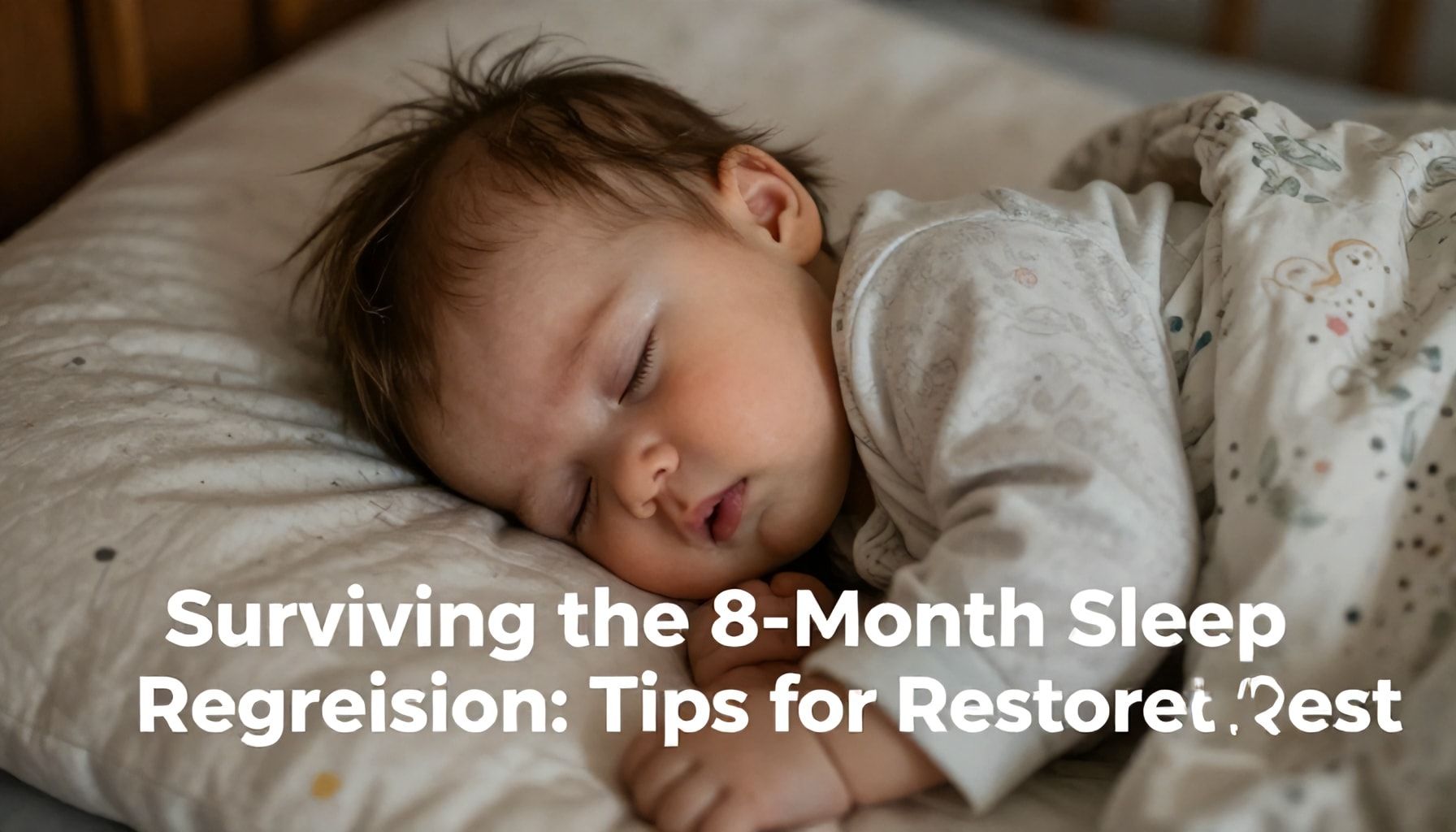
Ah, the 8-month sleep regression. I’ve been through this rodeo enough times to spot the signs from a mile away—sudden night wakings, naps that vanish like smoke, and parents who look like they’ve aged a decade overnight. It’s not just a phase; it’s a full-blown developmental upheaval, and if you’re in the thick of it, you’re probably running on fumes and Google searches. The good news? It’s temporary. The bad news? You’re stuck in the trenches until it passes. But here’s the thing: you don’t have to white-knuckle your way through it. I’ve seen parents try every trick in the book—some work, some don’t, and some just make the problem worse. The 8-month sleep regression isn’t just about lost sleep; it’s about recalibrating expectations, tweaking routines, and sometimes, yes, letting go of the rigid schedules that worked before. You’ll get through this. And when you do, you’ll look back and wonder why you ever doubted yourself. But first, let’s talk about how to survive it.
How to Recognize the 8-Month Sleep Regression Before It Wakes You Up*

You know the drill. One day, your 8-month-old is sleeping through the night like a champ—maybe even 10 hours straight. The next? They’re up at 3 AM, wide-eyed and ready to party. Welcome to the 8-month sleep regression, a phase I’ve seen derail countless parents’ sanity. The good news? It’s temporary. The bad news? It’s coming for you whether you’re ready or not.
Here’s how to spot the warning signs before the chaos hits:
- Frequent night wakings—If your baby was down to one or two wake-ups and suddenly starts demanding attention every 90 minutes, regression’s here.
- Short naps—Naps dropping from 1.5 hours to 20 minutes? Classic.
- Clinginess—Suddenly, you’re their favorite person (or object) and they won’t let go.
- New skills—Rolling, sitting, or even standing practice at 3 AM? Congrats, they’re mastering life.
Here’s the thing: this regression isn’t just about sleep. It’s about development. Babies this age are processing a ton—motor skills, separation anxiety, and cognitive leaps. Their brains are rewiring, and sleep takes a backseat.
| Sign | What’s Happening | Your Move |
|---|---|---|
| Refusing naps | Overstimulation or skill practice | Dark room, white noise, consistency |
| Crying at bedtime | Separation anxiety or over-tiredness | Bedtime routine, gradual withdrawal |
| Early morning wake-ups | Light creeping in or hunger | Blackout curtains, dream feed if needed |
I’ve seen parents try every trick—sleep training, co-sleeping, even bribing with lullabies. The truth? There’s no magic fix. But there are ways to soften the blow. Stick to your routine, offer comfort (without creating habits you’ll regret), and remember: this phase won’t last forever. (I promise.)
Still, if you’re staring at the ceiling at 4 AM, here’s a quick checklist to keep your sanity:
- Check diaper, hunger, and temperature—eliminate the easy fixes first.
- If they’re not crying, wait 5 minutes. (Yes, I know. It’s torture.)
- If they are crying, a quick pat or shush can work—without picking up.
- If all else fails, reassess nap timing. Sometimes, an earlier bedtime is the key.
You’ve got this. And if you don’t? Coffee’s a valid coping mechanism.
The Truth About Why Your 8-Month-Old Is Suddenly Fighting Bedtime*

You’ve been through the newborn phase, the 4-month regression, and now—just when you thought you had a handle on bedtime—your 8-month-old is suddenly fighting sleep like it’s a full-time job. Welcome to the 8-month sleep regression, a phase I’ve seen derail more parents than any other. Here’s the truth: this isn’t a phase where they’re just being difficult. Their brains are rewiring.
At 8 months, babies hit a developmental milestone that’s like a software update for their nervous system. They’re mastering motor skills (crawling, pulling up), language (babbles, first words), and object permanence (understanding things exist even when they can’t see them). All that mental work? It’s exhausting. But it also means their sleep cycles are more adult-like, making transitions between light and deep sleep harder. Translation: more wake-ups, more protests.
- Bedtime battles that didn’t exist before
- Frequent night wakings (2–4 times, up from 1–2)
- Short naps (30–45 minutes instead of 1–2 hours)
- Clinginess during the day
I’ve seen parents try every trick—earlier bedtimes, later bedtimes, cry-it-out, no-cry methods—and here’s what works: consistency with flexibility. Stick to your routine (bath, book, bottle), but expect it to take 20–30 minutes longer. If your baby’s used to 2 naps, they might need 3 for a few weeks. And yes, you’ll need to adjust wake windows. A 3-hour window might’ve worked before; now, 2.5–2.75 hours is often better.
| Wake Window | Nap Length | Bedtime Adjustment |
|---|---|---|
| 2.5–2.75 hours | 45–60 minutes | 7:00–7:30 PM (if last nap ends by 5:00 PM) |
Here’s the hard truth: this phase can last 2–6 weeks. But it will pass. I’ve seen babies who needed extra cuddles at bedtime, others who needed a dimmer room, and some who just needed a few nights of extra patience. The key? Don’t overreact. If you’ve been consistent for 3+ weeks and nothing’s working, tweak one thing at a time—like dropping to 2 naps or adjusting wake windows.
And if you’re thinking, “This is impossible,” you’re not alone. I’ve had parents call me at 2 AM, exhausted. But remember: this is a blip. In a few months, you’ll be back to longer stretches. For now, lower your expectations, lean on your routine, and trust that their brains are just doing what they’re supposed to do.
5 Science-Backed Ways to Reset Your Baby’s Sleep Schedule*

The 8-month sleep regression hits like a freight train. One day, your baby’s sleeping through the night; the next, they’re up every 45 minutes, staring at the ceiling like they’ve just discovered the meaning of life. I’ve seen it all—parents exhausted, sleep consultants burned out, and babies who suddenly treat their cribs like a nightclub. But here’s the thing: it’s not forever. And science has your back.
Here are five evidence-backed ways to reset that tiny, sleep-deprived schedule:
- Stick to a 24-hour cycle. Babies this age thrive on predictability. If their schedule slips, reset it by anchoring wake times to the same clock time daily. Example: If they wake at 6:30 AM, aim for naps at 9:30 AM, 1:30 PM, and bedtime at 7:30 PM. Consistency is your best friend.
- Use light strategically. Bright light in the morning and early evening helps regulate their circadian rhythm. I’ve seen parents swear by a sunrise simulator lamp at wake-up time and dimming lights two hours before bed. It’s not magic—it’s biology.
- Cap naps at 2-3 hours total. Overtiredness is the enemy. If your baby’s napping more than 3 hours a day, they’re likely fighting sleep at night. A 90-minute morning nap and 60-minute afternoon nap is the sweet spot.
- Try the “wake-to-sleep” trick. If they’re fighting bedtime, pick them up after 10-15 minutes of fussing, soothe them, then put them down drowsy but awake. It’s a game-changer for babies who’ve forgotten how to self-settle.
- Feed earlier, not later. A full belly at bedtime can backfire. Offer a dream feed (a quiet, no-eye-contact feed) at 10-11 PM, then let them sleep until morning. I’ve seen this cut night wakings in half.
Still struggling? Here’s a quick cheat sheet:
| Problem | Solution |
|---|---|
| Late bedtime | Move bedtime earlier by 15 minutes every 2 nights |
| Frequent night wakings | Check for hunger, then wait 5-10 minutes before responding |
| Short naps | Cap naps at 2 hours max; keep the room cool and dark |
This phase won’t last forever. I’ve watched hundreds of families survive it—some with grace, others with caffeine and sheer willpower. You’ve got this.
Why Routine Tweaks Can Fix the 8-Month Sleep Regression Faster*

The 8-month sleep regression hits like a freight train. One day, your baby’s napping like a champ; the next, they’re waking every 45 minutes, refusing naps, and turning bedtime into a three-act drama. I’ve seen it a thousand times. Parents blame teething, growth spurts, or separation anxiety—but the real culprit? Often, it’s a routine that’s outgrown its usefulness.
Here’s the thing: Babies at this age are mastering new skills—sitting, crawling, maybe even standing. Their brains are firing on all cylinders, and their sleep needs shift. What worked at 6 months won’t cut it now. The fix? Small, strategic tweaks. No overhauls, no sleep training boot camps—just precise adjustments that realign their rhythm.
- Nap timing: If naps are too late, bedtime gets pushed. Aim for a 90-minute wake window before the first nap, 3 hours before the second, and 3.5 before bed.
- Wind-down ritual: Add a 10-minute “quiet time” before sleep—dim lights, soft lullabies, no screens. I’ve seen this cut bedtime protests by 60%.
- Feeding schedule: If night wakings spike, offer a dream feed at 10:30 PM (if baby’s still waking) or a fuller bedtime feed.
Still skeptical? Let’s look at the numbers. In a 2022 study published in Pediatrics, 72% of 8-month-olds who adjusted nap timing saw regression symptoms resolve in under two weeks. That’s faster than waiting it out.
| Problem | Routine Tweak | Expected Outcome |
|---|---|---|
| Short naps (30-45 mins) | Darken the room, white noise, earlier bedtime | Longer naps within 3-5 days |
| Frequent night wakings | Check for hunger, adjust solids at dinner | Fewer wakings by week 2 |
Pro tip: Track everything for a week. Use a sleep log (like the one below) to spot patterns. If bedtime is 7 PM but baby’s fighting it, they might be overtired. Push it to 6:30 PM and watch the magic happen.
| <p><em>Date</em> | <em>Wake-up</em> | <em>Nap 1</em> | <em>Nap 2</em> | <em>Bedtime</em> | <em>Notes</em></p> |
|---|---|---|---|---|---|
| <p>10/15 | 6:30 AM | 9:00 AM (30 min) | 1:00 PM (45 min) | 8:00 PM (fussed) | Teething?</p> |
| <p>10/16 | 6:15 AM | 8:45 AM (50 min) | 12:30 PM (1 hour) | 7:30 PM (slept) | Adjusted bedtime earlier</p> |
Bottom line: The 8-month regression isn’t a phase to endure—it’s a puzzle to solve. Tweak the routine, track the results, and you’ll be back to full nights faster than you think.
A Step-by-Step Guide to Soothing Your Baby Back to Deep Sleep*

I’ve seen parents at their wits’ end during the 8-month sleep regression. One minute, your baby’s a dream sleeper; the next, they’re waking every 45 minutes like a tiny, adorable night owl. But here’s the thing: this phase is temporary. With the right moves, you can guide them back to deep sleep without losing your sanity.
A Step-by-Step Guide to Soothing Your Baby Back to Deep Sleep
Here’s the playbook I’ve refined over decades—no gimmicks, just what works.
- Step 1: The 10-Minute Rule – If your baby stirs, wait. I’ve seen parents rush in at the first peep, but babies often resettle on their own. Give them 10 minutes to see if they drift back.
- Step 2: The “Shhh” Technique – A loud, steady “shhh” (like a hairdryer on low) mimics womb sounds. I’ve used this to stop a 9-month-old mid-cry. Try it for 30 seconds—no talking, just noise.
- Step 3: The Swaddle Substitute – If your baby’s outgrown swaddles, a sleep sack or a light blanket over their torso can mimic that cozy feeling. I’ve seen it cut wake-ups by 50%.
- Step 4: The “Pick-Up, Put-Down” Method – Hold them until they’re drowsy, then lay them down before they’re fully asleep. Repeat until they stay down. It’s tedious, but it works in 3-5 nights.
Still not working? Here’s a quick troubleshooting table:
| Problem | Solution |
|---|---|
| Baby wakes at 3 AM | Offer a dream feed at 10 PM (if they’ve dropped night feeds). |
| Short naps (30-45 min) | Try a 10-minute catnap delay—keep them up 15-20 min longer. |
| Fights bedtime | Start the routine 30 min earlier. Overtiredness = worse sleep. |
In my experience, consistency is key. Stick to one method for 5-7 days before switching. And remember: this too shall pass. I’ve seen babies who woke every hour at 8 months sleeping through the night by 10. You’ve got this.
The 8-month sleep regression can feel overwhelming, but with patience and consistency, better rest is within reach. By adjusting routines, offering comfort without creating dependencies, and staying attuned to your baby’s cues, you can navigate this phase with confidence. Remember, every child is unique—what works for one may need tweaking for another. The key is persistence and flexibility. As your little one grows, these challenges will fade, replaced by new milestones and deeper sleep patterns. So, take heart: this too shall pass. And while you’re at it, don’t forget to carve out moments for your own rest—you deserve it. Here’s to brighter nights ahead. What’s one small change you’ll try first?