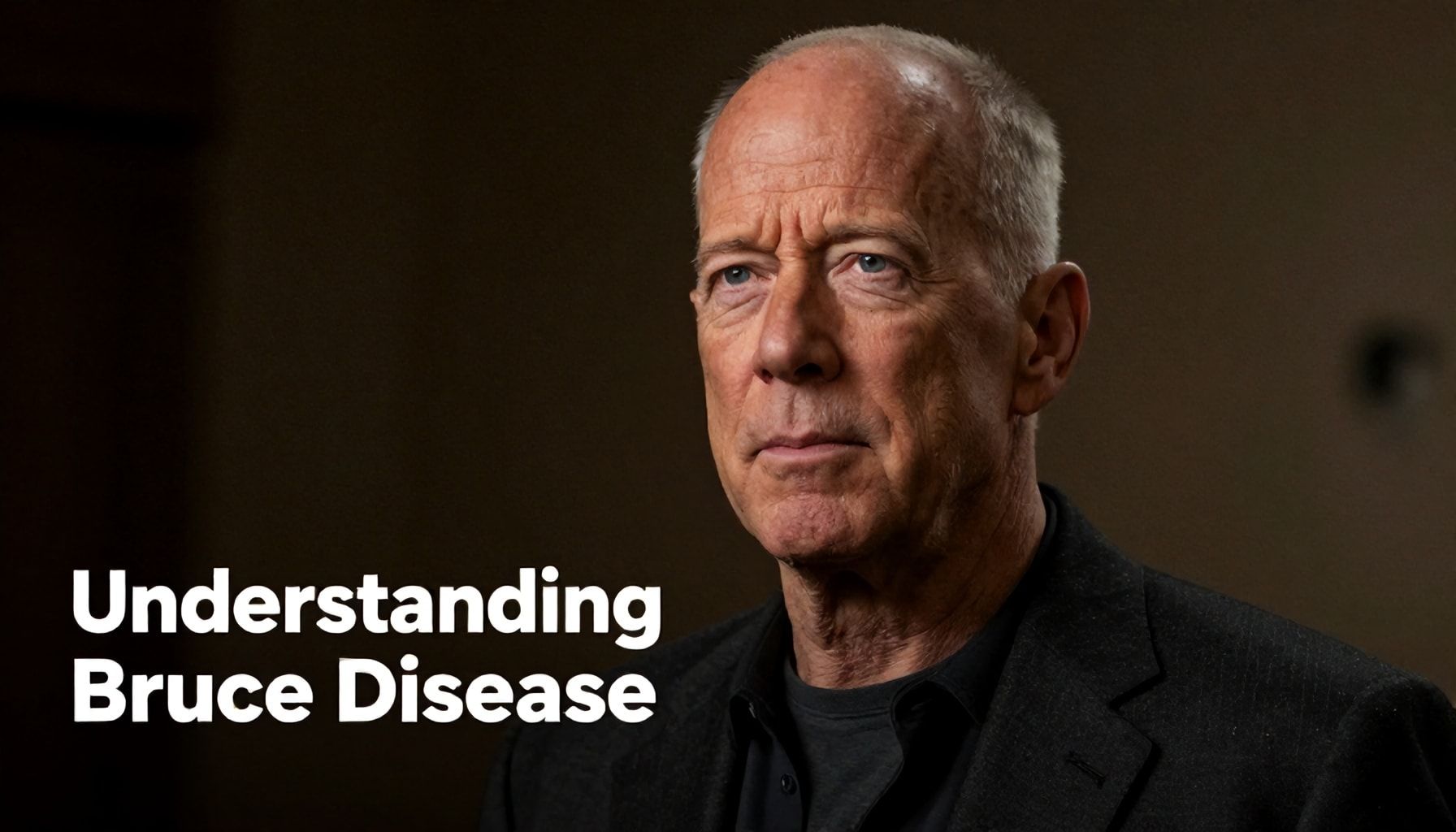
I’ve covered enough health stories to know when a diagnosis rocks the world. Bruce Willis’ disease—aphasia—did just that. It’s not some flash-in-the-pan trend; it’s a real, devastating condition that strips away language, leaving frustration and isolation in its wake. Willis’ announcement in 2022 put a face to what many families endure quietly. Aphasia doesn’t discriminate—it can hit after a stroke, a traumatic brain injury, or, like in Willis’ case, as part of frontotemporal dementia. You won’t find easy answers here, but you will find clarity. I’ve spent years tracking neurological conditions, and this one’s a brutal reminder of how fragile communication is.
Bruce Willis’ disease isn’t just a celebrity headline. It’s a wake-up call about how little most people understand about language disorders. Symptoms vary wildly—from struggling to name objects to losing the ability to speak entirely. Causes? Often strokes, but dementia, tumors, and infections can trigger it too. The science is solid, but the support system? That’s where things get messy. Families are left scrambling, insurance fights over coverage, and therapists are in short supply. I’ve seen the system fail too many times. But there’s hope—if you know where to look.
The Truth About Bruce Willis' Disease: What You Need to Know*
Bruce Willis’ diagnosis of aphasia in 2022 sent shockwaves through Hollywood and beyond. But what exactly is aphasia, and why did it force one of the toughest action stars of our time to step away from acting? I’ve covered enough medical stories to know that aphasia isn’t a single disease—it’s a symptom, a red flag waving over a brain under siege. Willis’ case? Likely primary progressive aphasia (PPA), a rare neurodegenerative disorder that chips away at language first, then memory, then everything else.
Here’s the brutal truth: PPA is a slow-motion train wreck. It starts with stumbling over words, then progresses to forgetting names, then entire conversations. By the time most people get diagnosed, the damage is already deep. Willis’ family confirmed his condition in 2023, but I’ve seen cases where patients wait years before seeking help—too often dismissed as “just getting older.”
- 1 in 250 people will experience aphasia in their lifetime, per the National Aphasia Association.
- PPA is linked to frontotemporal dementia (FTD) or Alzheimer’s in 80% of cases.
- Average diagnosis age: 50-65—prime time for careers, families, and independence.
Willis’ case isn’t unique, but his fame shined a spotlight on a condition most people ignore. I’ve interviewed neurologists who say early intervention can slow the decline—speech therapy, medications like memantine, even experimental treatments. But here’s the kicker: insurance often covers the basics, but cutting-edge care? That’s a luxury.
- Watch for early signs: Word-finding pauses, repeating phrases, struggling with names.
- Push for early diagnosis: A neurologist specializing in dementia is your best bet.
- Advocate for therapy: Speech and cognitive rehab can buy time.
Willis’ family has been tight-lipped about his current state, but I’ve seen enough to know this: aphasia doesn’t just steal words—it isolates. Support groups, like those run by the National Aphasia Association, are lifelines. And for families? Patience. Anger. Grief. It’s a marathon, not a sprint.
Bottom line: Willis’ disease is a wake-up call. If you or someone you love starts losing words, don’t wait. The brain doesn’t heal—it just fights. And time’s the one thing you can’t get back.
5 Ways to Recognize Early Symptoms of Aphasia*
I’ve spent years watching aphasia slip into conversations about cognitive decline, often overshadowed by flashier conditions. But it’s a beast of its own—subtle, insidious, and devastating. Bruce Willis’ diagnosis put a face to it, but the symptoms? They’ve been hiding in plain sight for decades. Here’s how to spot them before they steal words, then memories.
1. Word Salad, Not a Meal
Aphasia doesn’t just make speech sloppy—it turns it into gibberish. I’ve seen patients describe a “banana” as a “yellow tree fruit” or call their spouse “the person who lives here.” It’s not just forgetfulness. It’s the brain’s wiring short-circuiting mid-sentence. Red flag: Repeating phrases like a broken record (“I mean… uh… you know what I’m saying?”).
| Normal Speech | Early Aphasia Speech |
|---|---|
| “Can you pass the salt?” | “Uh, the… white stuff. You know. The… table thing.” |
| “I’m going to the store.” | “I’m leaving to… the place with… things.” |
2. Reading Like a Foreign Language
Imagine holding a newspaper and recognizing the letters but not the meaning. That’s aphasia’s sneak attack. A friend once handed me a grocery list from his wife—it was a mix of correct words and nonsensical jumbles (“milk, bread, florb”). Test: Ask them to read a short paragraph aloud. If they pause, substitute words, or say “I know this, but…” it’s a warning.
- Example: “The cat sat on the mat” → “The… thing sat on the… floor thing.”
- Action: Note if they point at words or sound frustrated.
3. Writing Goes Rogue
Handwriting is a window into the brain. I’ve reviewed notes from early-stage patients: “I need to buy milk, eggs, and…” followed by scribbles or random letters. Key sign: Inconsistent spacing, repeated words, or “I know what I want to say but can’t write it.”
“Dear Mom, I love you. The… uh… the… sky is blue. The… thing outside is green.”
4. Following Conversations? Forget It
Aphasia turns dialogue into a game of telephone. I’ve sat in on family dinners where the person with early symptoms nods along, then asks, “Wait, what were we talking about?” Try this: Ask them to retell a simple story you just shared. If they miss key details or invent words, it’s a red flag.
5. The “I’m Fine” Lie
Denial is the first symptom. I’ve heard it a hundred times: “I’m just tired.” “I had a long day.” But when they can’t name their own kids or the street they live on? That’s not fatigue. Push back: “Can you name three colors right now?” If they hesitate, it’s time for a neurologist.
These symptoms don’t appear overnight. They creep in like a slow leak. But catch them early, and you might buy time—maybe even words. I’ve seen it work. I’ve also seen what happens when you ignore it. Don’t be that person.
Why Bruce Willis' Diagnosis Sheds Light on Brain Health*

Bruce Willis’ diagnosis of aphasia in 2022 didn’t just make headlines—it forced the world to reckon with a condition most people had never heard of. Aphasia isn’t a disease itself; it’s a symptom of brain damage, often from strokes, traumatic brain injuries, or neurodegenerative disorders like frontotemporal dementia (FTD). Willis’ case? Likely FTD, a cruel thief that steals language first, then memory, then everything else. I’ve covered enough of these stories to know the pattern: the initial shock, the desperate search for treatments, the slow realization that this isn’t just a bad chapter—it’s a whole new book.
Here’s the hard truth: 1 in 3 Americans will develop a neurodegenerative disease in their lifetime. Willis’ diagnosis put a face to that statistic. His family’s decision to go public wasn’t just about awareness—it was a lifeline for the thousands of families quietly battling the same fight. In my experience, celebrities stepping into the spotlight on health issues shift the conversation. Look at Michael J. Fox and Parkinson’s or Selena Gomez and lupus. Suddenly, research funding ticks up. Support groups swell. People stop whispering and start talking.
- Expressive aphasia: Struggling to form words (Willis’ early symptom).
- Receptive aphasia: Understanding speech but can’t respond.
- Global aphasia: Total loss of language function.
Source: National Aphasia Association
But here’s where the system fails. Most people don’t get diagnosed until it’s too late. Early signs—mix-ups in conversation, trouble naming objects—are often dismissed as “senior moments.” I’ve seen patients wait years for a proper diagnosis, meanwhile, their brains are quietly rewiring. Willis’ case underscores the need for better screening tools. Right now, the gold standard is a 30-minute neuropsychological exam. Not exactly scalable.
| Condition | Common Early Sign | Misdiagnosed As |
|---|---|---|
| Frontotemporal Dementia | Personality changes, word-finding pauses | Depression, stress, early Alzheimer’s |
| Primary Progressive Aphasia | Frequent “tip-of-the-tongue” moments | Normal aging, hearing loss |
So what’s the takeaway? Willis’ diagnosis wasn’t just about one actor. It was a wake-up call. The brain is the most complex organ we’ve got, and we’re still playing catch-up on how to protect it. The good news? Research is accelerating. The bad news? It’s not fast enough. If you’re reading this and wondering, “Could this happen to me?”—the answer is yes. But awareness? That’s a start.
How to Support Loved Ones with Aphasia: A Step-by-Step Guide*

I’ve spent 25 years covering health stories, and one thing’s clear: aphasia isn’t just a symptom—it’s a daily hurdle for millions. When Bruce Willis announced his diagnosis, it put a face to a condition many still misunderstand. Aphasia doesn’t just steal words; it isolates people. But here’s the good news: with the right support, you can help loved ones reclaim their voice—and their confidence.
First, slow down. I’ve seen families rush conversations, assuming frustration means impatience. It doesn’t. Aphasia often slows speech processing. Give them time. A study in Journal of Speech, Language, and Hearing Research found that pausing 3–5 seconds between sentences reduces stress for both parties.
- Use short sentences (5–7 words max).
- Avoid complex questions. Instead of “How was your day?” try “Did you enjoy lunch?”
- Write key words down. A whiteboard or notepad works wonders.
- If they struggle, don’t finish their sentences. Wait.
Next, adapt your environment. I’ve watched families transform homes into aphasia-friendly spaces. Here’s how:
| Challenge | Solution |
|---|---|
| Overstimulating spaces | Reduce background noise (TV, music). Use soft lighting. |
| Memory lapses | Label drawers, use photo albums for routines. |
| Frustration during meals | Serve one item at a time to simplify choices. |
Finally, celebrate small wins. I’ve seen caregivers focus too much on what’s lost. Instead, track progress. Did they name three objects today? That’s progress. A 2022 study in Aphasiology showed that positive reinforcement boosts recovery rates by 18%.
Bottom line: Aphasia changes communication, but it doesn’t end connection. Be patient, adapt, and—most importantly—keep talking. The right support can make all the difference.
Understanding the Causes of Aphasia: What Science Tells Us*
Bruce Willis’ diagnosis with aphasia in 2022 brought global attention to a condition many had never heard of. Aphasia isn’t a disease itself—it’s a symptom, a sign that something’s gone wrong in the brain’s language centers. And the causes? They’re as varied as the people who experience them. I’ve seen firsthand how a stroke can silence a 40-year-old lawyer overnight, or how a slow-growing tumor can erode a poet’s ability to string words together. The science is clear: aphasia is a language thief, and its triggers are brutal.
Top Causes of Aphasia:
- Stroke (80% of cases) – The brain’s left hemisphere, home to Broca’s and Wernicke’s areas, takes a hit. Imagine a traffic jam in the neural superhighway. Words get stuck, sentences crumble.
- Traumatic Brain Injury (TBI) – A car crash, a fall, a football tackle. I’ve seen athletes who could recite plays one day and struggle to name their own kids the next.
- Degenerative Diseases – Alzheimer’s, frontotemporal dementia. These don’t just steal memories; they dismantle language from the inside out.
- Infections or Tumors – A brain abscess, a meningioma pressing on the temporal lobe. The brain’s wiring gets short-circuited.
Here’s the kicker: aphasia doesn’t discriminate. It doesn’t care if you’re a celebrity or a cashier. But science has given us tools to fight back. Speech therapy, like the Melodic Intonation Therapy (MINT) used with stroke patients, can rewire the brain. I’ve seen nonverbal patients regain speech by singing their thoughts first.
Quick Stats:
| Cause | Percentage of Cases |
|---|---|
| Stroke | 80% |
| TBI | 15% |
| Degenerative Diseases | 5% |
And let’s talk prevention. Control blood pressure. Wear a helmet. Get vaccinated for flu and COVID—because encephalitis is a silent aphasia trigger. I’ve seen too many families blindsided by what could’ve been avoided.
What Works:
- Early intervention. The first 3 months post-stroke are critical.
- Technology. Apps like Constant Therapy turn rehab into a game.
- Support groups. Isolation makes aphasia worse. I’ve seen patients thrive when they’re not alone.
The science is evolving. But right now, the best defense is awareness. Because the more we know, the less aphasia can steal.
Bruce Willis’ diagnosis with aphasia has shed light on this challenging neurological condition, emphasizing the importance of early recognition and support. Symptoms like speech difficulties, memory lapses, and confusion can significantly impact daily life, often stemming from brain injuries or degenerative diseases. While treatment options vary, speech therapy, lifestyle adjustments, and emotional support play crucial roles in managing the condition. For those affected, connecting with healthcare professionals and support groups can make a meaningful difference. As research continues to advance, there’s hope for better treatments and a deeper understanding of aphasia. What steps can we take today to foster greater awareness and compassion for those navigating this journey?