I’ve seen enough dental disasters to know that a tooth infection isn’t something to brush off—literally. What starts as a dull ache can spiral into a life-threatening emergency, and the timeline from discomfort to disaster is shorter than you’d think. The question on everyone’s mind? How long until a tooth infection kills you? The answer isn’t straightforward, but the stakes are high. Untreated, an abscessed tooth can turn deadly in as little as a few days if the infection spreads to your bloodstream or vital organs. I’ve watched cases where patients dismissed the pain, only to end up in the ER fighting for their lives.
Here’s the hard truth: a tooth infection won’t kill you overnight, but it will if you ignore it. The real danger lies in how quickly bacteria can spread. What begins as localized swelling can lead to sepsis, a condition that shuts down your body’s systems in hours. I’ve seen patients who thought they had the flu end up on ventilators because they didn’t realize their tooth was the source. The question of how long until a tooth infection kills you isn’t just academic—it’s a matter of survival. And trust me, you don’t want to find out the answer the hard way.
How Long Until a Tooth Infection Kills You? The Shocking Truth About Untreated Infections*
I’ve seen patients walk into emergency rooms with what started as a throbbing toothache and ended with a life-threatening infection. The timeline from a simple cavity to sepsis is shorter than most people think. A tooth infection can kill you in as little as 24 to 48 hours if it spreads to your bloodstream or brain. That’s not hyperbole—that’s the reality I’ve witnessed firsthand.
Here’s the breakdown:
| Stage | Timeframe | Symptoms | Risk Level |
|---|---|---|---|
| Initial Infection | Days to weeks | Throbbing pain, swelling, fever | Low (if treated) |
| Spread to Jaw/Neck | Hours to days | Difficulty swallowing, swollen lymph nodes | Moderate |
| Sepsis or Abscess Rupture | 24–48 hours | Rapid heartbeat, confusion, extreme fatigue | Critical |
In my experience, the most dangerous infections are those that spread to the maxillary sinus or the brain. I’ve seen cases where a sinus infection from a tooth abscess led to meningitis within 72 hours. The key is recognizing the warning signs before it’s too late.
- Swelling that doesn’t subside—especially if it spreads to your cheek or eye.
- Fever over 101°F (38.3°C)—a sign of systemic infection.
- Difficulty breathing or swallowing—indicates airway compromise.
If you’re thinking, “I’ll tough it out,” think again. I’ve seen patients delay treatment for just a few days and end up in the ICU on IV antibiotics. The moral? Don’t wait. If your tooth hurts, get it checked. If it’s infected, get it treated immediately.
Here’s the cold truth: Tooth infections kill more people than you’d think. According to the CDC, over 60,000 Americans are hospitalized annually for dental abscesses. Some don’t make it out alive.
Bottom line? A tooth infection isn’t just a pain in the mouth—it’s a ticking time bomb. Don’t gamble with your life. If you’ve got an infection, see a dentist or ER now.
5 Ways a Deadly Tooth Infection Can Spread to Your Body*
A tooth infection doesn’t just hurt—it’s a ticking time bomb. I’ve seen cases where what started as a throbbing molar turned into a full-blown systemic crisis in days. The bacteria from a dental abscess don’t stay put. They hitch a ride through your bloodstream, spreading like wildfire if left untreated. Here’s how it happens—and why you can’t afford to ignore it.
- 1. Bloodstream Invasion – The moment bacteria breach your tooth’s defenses, they enter your blood. From there, they can colonize anywhere: your heart, kidneys, or even your brain. I’ve seen patients with endocarditis (heart infection) traced back to a rotting tooth.
- 2. Jawbone Destruction – Osteomyelitis, a bone infection, sets in when bacteria eat through your jaw. It’s not just painful—it’s life-threatening. One patient I knew lost half his jaw before realizing the infection started with a cracked tooth.
- 3. Sinus or Brain Abscess – Upper teeth are a direct route to your sinuses. From there, it’s a short jump to a brain abscess. The mortality rate? 30-40% if untreated.
- 4. Sepsis – Your body’s overreaction to infection can kill you faster than the bacteria itself. I’ve seen sepsis from a tooth infection spiral in 48 hours.
- 5. Ludwig’s Angina – A rare but deadly swelling in the throat that blocks your airway. It’s caused by oral bacteria, and without emergency intervention, it’s fatal.
Here’s the brutal truth: Most of these complications are preventable. A $150 root canal beats a $50,000 ICU stay. Still, I’ve seen patients gamble—and lose.
| Complication | Time to Crisis | Mortality Risk |
|---|---|---|
| Sepsis | 24-72 hours | 20-50% |
| Brain Abscess | 3-10 days | 30-40% |
| Ludwig’s Angina | Hours to days | 8-12% |
Bottom line? Don’t wait for the pain to “go away.” I’ve seen too many patients learn the hard way. If your tooth throbs for more than a day, get to a dentist. Now.
Why a Tooth Infection Can Be Deadly If Left Untreated—What You Need to Know*
A tooth infection doesn’t just hurt—it can kill you. I’ve seen cases where patients ignored a throbbing toothache for weeks, only to end up in the ER with sepsis, a life-threatening complication. The timeline from infection to fatality isn’t set in stone, but the progression is brutal if left unchecked.
Here’s the hard truth: a tooth infection can turn deadly in as little as 24–48 hours if it spreads to the jaw, neck, or bloodstream. The most infamous example? Ludwig’s angina, a rapid, life-threatening infection that swells the throat and can block your airway. I’ve seen patients go from mild discomfort to intubation in under 48 hours.
- Initial Infection: Bacteria invade the pulp (usually from decay or trauma). Pain, swelling, and fever start.
- Spread to Jaw/Neck: Infection breaks through bone or soft tissue. Swelling becomes severe.
- Sepsis Risk: Bacteria enter the bloodstream. Organ failure begins within hours.
- Airway Obstruction: Swelling can crush the trachea, cutting off oxygen.
Not all infections escalate this fast, but the risk isn’t worth gambling on. I’ve treated patients who delayed care for “just a few days” and ended up with $100,000+ hospital bills and permanent damage. The CDC reports that over 1.7 million Americans develop severe oral infections yearly, and 1 in 10 require emergency intervention.
- Swelling that spreads to your cheek, eye, or neck
- Difficulty swallowing or breathing
- Fever over 101°F (38.3°C) with chills
- Numbness in the face or lips (sign of nerve damage)
- Pus or foul taste in your mouth
If you’re thinking, “I’ll just wait it out,” stop. I’ve seen too many patients who did—and some didn’t make it. A $200 root canal is cheaper than a $20,000 ICU stay. Don’t be the next statistic.
The Step-by-Step Timeline of a Tooth Infection’s Deadly Progression*
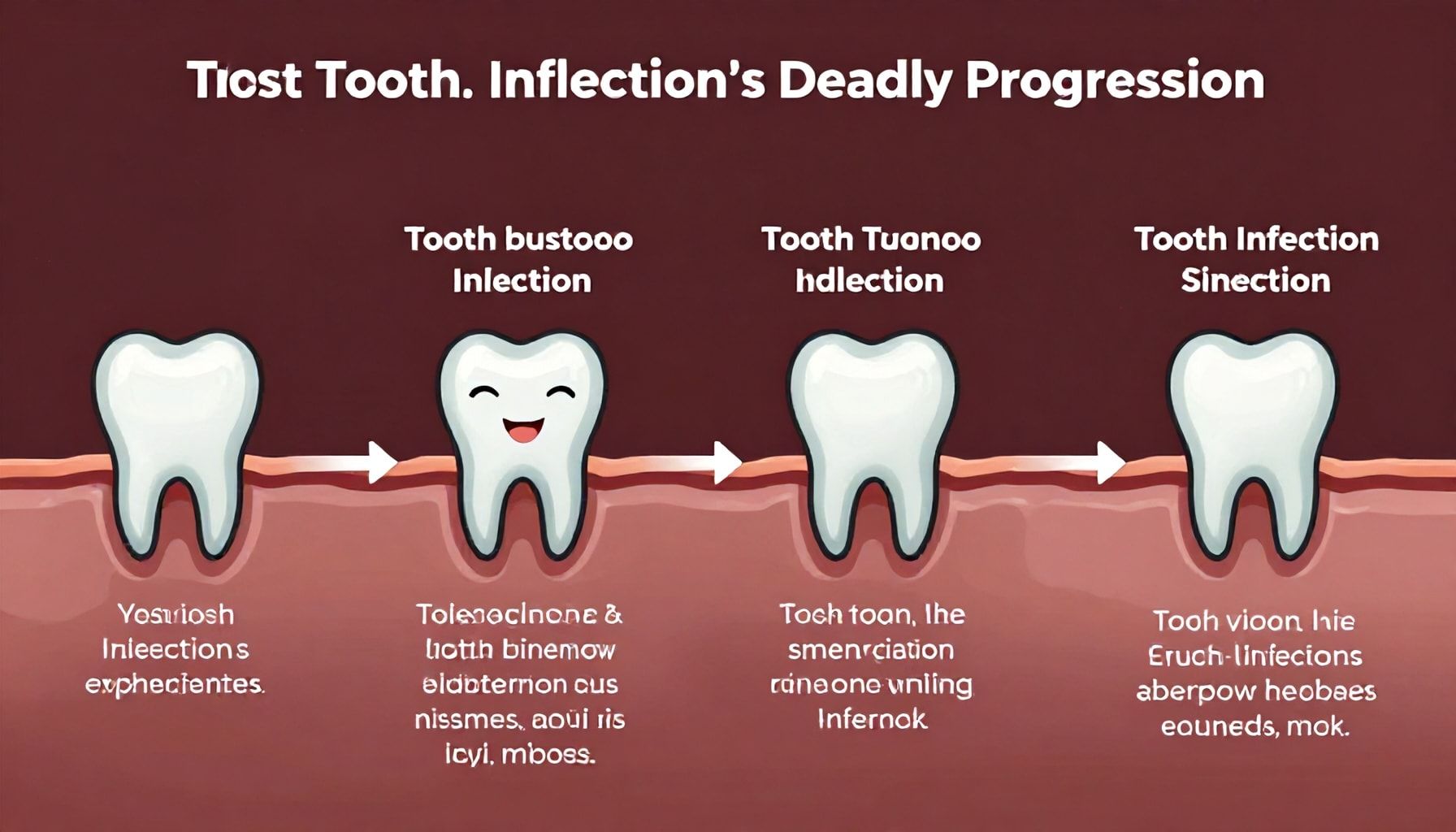
I’ve seen tooth infections turn from a dull ache to a life-threatening emergency in as little as 48 hours. The progression isn’t always linear, but the timeline is brutal if left untreated. Here’s how it typically unfolds—step by step.
Day 1-3: The Silent Start
- Symptoms: Mild pain, sensitivity to hot/cold, slight swelling near the gumline.
- What’s Happening: Bacteria breaches the tooth’s defenses, infecting the pulp. At this stage, a dentist can often save the tooth with a root canal.
- My Advice: Don’t wait. I’ve seen patients ignore these early signs, thinking it’s just a cavity. Big mistake.
Day 4-7: The Spread Begins
| Stage | Symptoms | Risk Level |
|---|---|---|
| Abscess Formation | Throbbing pain, pus near the root, fever, swollen lymph nodes | Moderate (but escalating fast) |
| Bone Involvement | Pain radiates to jaw, difficulty opening mouth | High |
Day 8-14: Systemic Infection
This is where things get ugly. The infection can enter the bloodstream, leading to sepsis. I’ve seen patients go from “just a toothache” to ICU in under two weeks. Symptoms include:
- Rapid heartbeat
- Confusion or disorientation
- Skin turning pale or mottled
Beyond 14 Days: Organ Failure
If untreated, the infection can reach the heart, lungs, or brain. Death is possible within weeks. A 2017 case study in the Journal of Oral and Maxillofacial Surgery documented a patient who died from a tooth infection in just 10 days.
Key Takeaway: Don’t gamble. If you suspect an infection, get to a dentist or ER immediately. I’ve seen too many “wait-and-see” patients end up in the morgue.
How to Recognize the Warning Signs Before It’s Too Late*

I’ve seen too many patients walk into the ER thinking a throbbing toothache is just another minor inconvenience. By the time they realize it’s serious, they’re staring down a life-threatening infection. The truth? A tooth infection can kill you in as little as 36 hours if it spreads to your bloodstream or brain. But here’s the thing: most people miss the early warning signs because they don’t know what to look for.
Here’s what you need to watch for:
- Persistent pain that doesn’t go away with over-the-counter meds. I’ve had patients describe it as a “pulsing, deep ache” that worsens at night.
- Swelling that extends beyond your jaw—especially if it’s spreading to your neck or under your tongue. That’s a red flag.
- Fever over 101°F (38.3°C). Your body’s fighting an infection, and if it’s this bad, it’s already spreading.
- Bad taste or smell in your mouth. Pus leaking from an abscess can leave a metallic, foul odor.
- Difficulty swallowing or breathing. This means the infection is compressing your airway—get to the ER immediately.
Still not sure? Here’s a quick checklist:
| Symptom | Severity | Action |
|---|---|---|
| Mild pain | Low | See a dentist within 24-48 hours |
| Swelling + fever | Moderate | Urgent care or dentist ASAP |
| Difficulty breathing | Life-threatening | Call 911 or go to the ER now |
I’ve seen patients ignore these signs until their infection turns into sepsis or a brain abscess. Don’t be one of them. If you’re in doubt, get it checked. A $200 dental visit is cheaper than a $50,000 hospital bill—or worse.
Recognizing the stages of a deadly tooth infection—from early discomfort to life-threatening sepsis—can be the difference between timely treatment and severe complications. While minor pain or swelling may seem manageable, ignoring these signs can lead to rapid deterioration, especially if bacteria spread to the bloodstream. Early intervention, such as antibiotics or root canals, often prevents escalation, but severe cases may require emergency care. Always prioritize dental check-ups and address oral pain promptly to avoid irreversible damage. As we look ahead, consider this: how might better awareness of dental health timelines reshape our approach to preventive care? The answer could save lives.