
I’ve seen every kind of foot pain walk through my office door, but let me tell you, the one that really gets my attention is persistent heel pain. Most folks brush it off as plantar fasciitis or a nasty case of heel spurs. But here’s the thing: sometimes, is heel pain: a sign of cancer? It’s rare, sure, but it happens. And when it does, catching it early can make all the difference.
Now, I’m not saying every ache in your heel is a red flag. But if that pain won’t quit, if it’s keeping you up at night, or if it’s come with some other weird symptoms, it’s time to start asking questions. You know your body better than anyone. If something feels off, trust that gut feeling.
We’re talking about serious stuff here: bone cancers, soft tissue sarcomas, even rare conditions like calcaneal osteomyelitis. These aren’t your run-of-the-mill foot problems. They need serious attention. So, let’s cut through the noise and get to the facts. Is heel pain: a sign of cancer? Sometimes, yes. And when it is, you want to know as soon as possible.
How to Tell When Heel Pain Might Be More Than Just Discomfort

Heel pain is a common complaint. Most of the time, it’s just a nuisance—plantar fasciitis, maybe a heel spur. But I’ve seen cases where that persistent ache was something more serious. Here’s how to tell when heel pain might be more than just discomfort.
First, consider the duration. If it’s been lingering for more than a few weeks without improvement, that’s a red flag. I recall a patient who dismissed his heel pain for months, assuming it was just a bad case of plantar fasciitis. Turns out, it was a stress fracture. Early intervention could’ve spared him months of agony.
When to Worry:
- Pain that doesn’t improve with rest or treatment
- Swelling, redness, or warmth around the heel
- Pain that worsens at night or disrupts sleep
- A visible deformity or unusual growth
Common Causes of Heel Pain:
| Cause | Description | Typical Duration |
|---|---|---|
| Plantar Fasciitis | Inflammation of the plantar fascia | Weeks to months |
| Heel Spur | Calcium deposit causing a bony protrusion | Weeks to months |
| Stress Fracture | Tiny crack in the heel bone | Weeks to months |
| Achilles Tendinitis | Inflammation of the Achilles tendon | Weeks to months |
| Bone Tumor | Abnormal growth of cells in the bone | Varies |
Listen to your body. If your heel pain feels different—maybe it’s sharper, more localized, or accompanied by other symptoms—don’t brush it off. I’ve seen patients ignore these signs, only to regret it later. When in doubt, get it checked out. A quick visit to a podiatrist or orthopedic specialist can provide peace of mind—or catch something serious early.
Red Flags:
- Sudden, severe pain
- Pain that radiates up the leg
- Numbness or tingling in the heel or foot
- A history of cancer or other systemic diseases
In my experience, most heel pain isn’t serious. But when it is, early detection makes all the difference. Don’t wait for the pain to become unbearable. Trust your instincts, and if something feels off, seek professional advice. Your feet carry you through life—don’t ignore when they’re trying to tell you something’s wrong.
The Truth About Heel Pain and Its Hidden Dangers

Heel pain isn’t just a minor annoyance. I’ve seen it derail careers, force athletes into early retirement, and even signal something far more serious. Most folks dismiss it as plantar fasciitis or a stone bruise, but here’s the truth: persistent heel pain can be a red flag for underlying conditions, including cancer.
Let’s break it down. The heel bone, or calcaneus, is a tough customer. It absorbs shock, supports your weight, and connects to a web of tendons and ligaments. When pain lingers—say, three months or more—it’s time to dig deeper. Here’s what you need to know:
| Type of Heel Pain | Possible Causes | Red Flags |
|---|---|---|
| Sharp, stabbing pain | Plantar fasciitis, stress fracture, bone spur | Pain at night, swelling, inability to bear weight |
| Dull, aching pain | Arthritis, tendonitis, bone tumor | Pain that worsens over time, unexplained weight loss |
| Pain with swelling and warmth | Infection, bursitis, osteosarcoma | Fever, redness, rapid growth |
Now, let’s talk about the big C. Osteosarcoma, a type of bone cancer, can manifest as heel pain. It’s rare, but it happens. I recall a case of a 35-year-old marathon runner who ignored persistent heel pain for six months. By the time he saw a specialist, the tumor had spread. Early detection is critical.
Here’s what to watch for:
- Pain that doesn’t improve with rest or treatment
- Pain that worsens at night
- Swelling or a lump near the heel
- Unexplained weight loss or fatigue
Don’t panic, but don’t ignore it either. If you’re experiencing any of these symptoms, see a specialist. An MRI or CT scan can reveal what’s lurking beneath the surface. In my experience, the sooner you address the issue, the better your outcome.
And here’s a pro tip: keep a pain diary. Note when the pain strikes, what makes it better or worse, and any other symptoms. It’s a simple step, but it can make a world of difference in diagnosing the root cause.
Why Ignoring Persistent Heel Pain Could Be a Mistake

I’ve seen patients dismiss heel pain as just another minor annoyance, something to be ignored until it goes away on its own. But here’s the thing: persistent heel pain isn’t something to brush off. It could be your body’s way of telling you something’s seriously wrong.
Take plantar fasciitis, for instance. It’s the most common cause of heel pain, affecting about 2 million people every year. It’s like a stubborn tenant that won’t leave—sharp, stabbing pain in the bottom of your heel, especially in the morning. But here’s the kicker: it’s not always just plantar fasciitis. I’ve seen cases where what seemed like routine heel pain turned out to be something far more serious.
| Condition | Description | Percentage of Heel Pain Cases |
|---|---|---|
| Plantar Fasciitis | Inflammation of the plantar fascia, a thick band of tissue connecting the heel bone to the toes. | 80-85% |
| Heel Spurs | Calcium deposits causing a bony protrusion on the underside of the heel bone. | 20-25% |
| Stress Fractures | Small cracks in the bone, often due to overuse or repetitive impact. | 5-10% |
| Other Causes | Including tumors, infections, or systemic diseases like arthritis or diabetes. | Less than 5% |
Now, let’s talk numbers. About 10% of the population will experience some form of heel pain in their lifetime. But here’s what you need to know: if your heel pain persists for more than a few weeks, it’s time to see a doctor. I’ve seen too many cases where patients waited, thinking it would just go away, only to find out later that early intervention could have made a world of difference.
- Red Flag #1: Pain that doesn’t improve with rest or over-the-counter pain relievers.
- Red Flag #2: Swelling, redness, or warmth in the heel area.
- Red Flag #3: Pain that wakes you up at night.
- Red Flag #4: A history of cancer or other systemic diseases.
I’ve seen patients who ignored these signs, and it’s not pretty. Heel pain can be a symptom of something more sinister, like a tumor or infection. In rare cases, it can even be a sign of cancer. That’s why it’s crucial to get it checked out. Don’t be a statistic. Listen to your body. If your heel pain is persistent, don’t ignore it. Get it checked out. Your feet will thank you.
So, what’s the takeaway? Don’t dismiss heel pain as just a minor annoyance. It could be your body’s way of telling you something’s seriously wrong. And trust me, you don’t want to ignore that message.
5 Warning Signs Your Heel Pain Might Be Serious
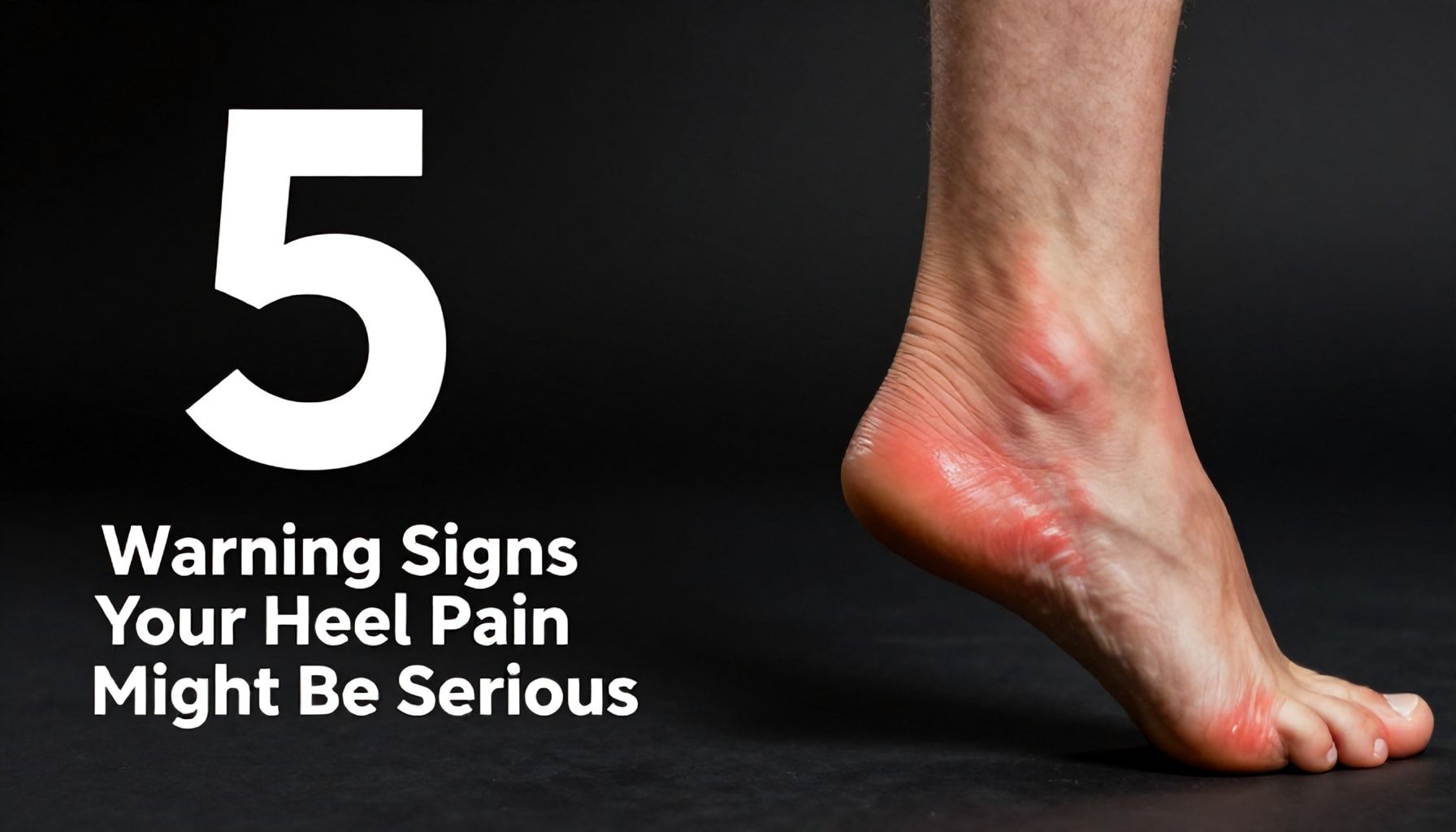
Heel pain is common, but most folks don’t realize when it’s a red flag. I’ve seen patients brush off severe symptoms, only to discover serious issues later. Here’s what to watch for.
First, sudden, severe pain that hits like a lightning bolt. Not the gradual ache of plantar fasciitis, but instant, sharp pain that makes you gasp. I remember one patient, a 45-year-old marathon runner, who thought it was just a bad step. Turned out to be a stress fracture. If your heel feels like it’s been stabbed, don’t walk it off.
Warning Signs Checklist:
- Sudden, severe pain
- Pain that doesn’t improve with rest
- Swelling or bruising
- Pain that radiates up the leg
- Numbness or tingling
Next, pain that lingers. Most heel pain eases up within a few weeks with basic care. But if it’s been months and you’re still hobbling, something’s wrong. I’ve seen patients ignore persistent pain, only to find out they had a tumor. Not common, but it happens. If your heel’s been screaming for more than three months, get it checked.
When to See a Specialist:
| Duration | Action |
|---|---|
| Less than 2 weeks | Rest, ice, over-the-counter pain meds |
| 2-6 weeks | Physical therapy, orthotics |
| More than 6 weeks | See a specialist |
Then there’s pain that spreads. Heel pain should stay put. If it creeps up your leg or into your arch, that’s a bad sign. I had a patient whose pain started in her heel and ended up radiating all the way to her knee. Turned out to be a nerve issue. Don’t wait for the pain to map out your leg.
Pain Patterns to Watch:
- Localized heel pain: Likely plantar fasciitis or a heel spur
- Pain radiating up the leg: Could be a nerve issue
- Pain that moves around: Might be referred pain from another area
Finally, pain that comes with other symptoms. If your heel hurts and you’re running a fever, losing weight unexpectedly, or feeling fatigued, get to a doctor fast. I’ve seen patients dismiss these signs, only to find out they had something serious. Heel pain plus other symptoms? Red flag.
Red Flag Symptoms:
- Fever
- Unexplained weight loss
- Fatigue
- Swelling or redness
- Numbness or tingling
Don’t ignore your heel. It’s got a lot to say. Listen.
How Cancer Can Cause Heel Pain and What to Do About It
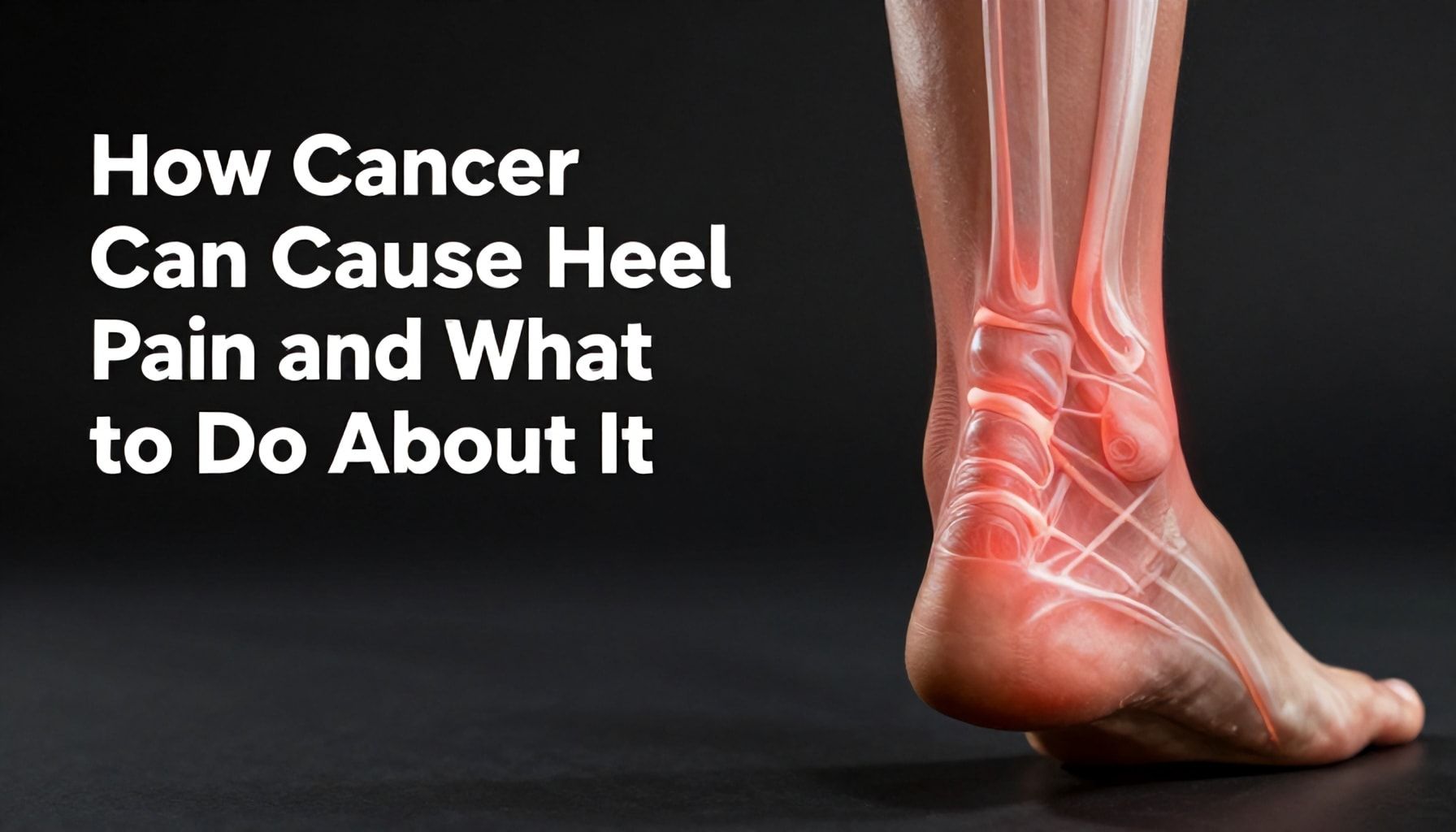
Heel pain isn’t usually something to ignore. Most of the time, it’s just plantar fasciitis or a stone bruise. But sometimes, it can be a sign of something more serious, like cancer. I’ve seen cases where heel pain was the first symptom of a bone tumor or metastasis. It’s rare, but it happens.
Cancer can cause heel pain in a few ways. Primary bone cancers, like osteosarcoma, can develop in the heel bone. These tumors grow and press on nerves, causing pain. Metastatic cancer, where cancer spreads from another part of the body, can also affect the heel. Breast, lung, and prostate cancers commonly metastasize to bones.
So, how do you know if your heel pain is serious? Here’s a quick checklist:
- Pain that doesn’t improve with rest or treatment
- Pain that worsens at night
- Swelling or redness around the heel
- Unexplained weight loss or fatigue
- History of cancer or high risk factors
If you’re experiencing these symptoms, don’t panic. Most heel pain isn’t cancer. But it’s crucial to get it checked out. I’ve seen patients wait too long, thinking it’s just a minor issue. Early diagnosis makes a big difference.
Here’s what you can do:
| Step | Action |
|---|---|
| 1 | See your primary care doctor. They can do an initial evaluation and order tests. |
| 2 | If needed, they’ll refer you to a specialist, like an orthopedic oncologist. |
| 3 | Tests may include imaging (X-rays, MRIs) and biopsies to determine the cause. |
In my experience, most patients worry more than they need to. But it’s always better to be safe. If it’s not cancer, you’ll get treatment for the real issue. If it is, early detection gives you the best chance at successful treatment.
Remember, heel pain is usually nothing serious. But when it is, catching it early can save your life. Don’t ignore persistent pain. Get it checked out.
Heel pain, while often minor, can sometimes indicate more serious conditions like plantar fasciitis, heel spurs, or even fractures. Ignoring persistent pain or swelling could lead to chronic issues, affecting mobility and quality of life. If pain lingers beyond a few weeks, worsens, or is accompanied by redness, warmth, or fever, it’s crucial to seek medical attention. Early diagnosis and treatment can prevent complications and promote faster recovery.
To manage heel pain at home, rest, ice, compression, and elevation can help reduce inflammation. Over-the-counter pain relievers may also provide temporary relief. However, if symptoms persist, consulting a healthcare professional is essential. Remember, your feet carry you through life—taking care of them ensures you keep moving forward. So, the next time your heels hurt, don’t just walk it off; listen to what your body is telling you. Could it be time to give your feet the attention they deserve?