We’ve all been there—the awkward silence after “How’s your day?” or the forced small talk that goes nowhere. I’ve spent 25 years watching people fumble through conversations, convinced that deeper connections are some kind of mystical art. Spoiler: They’re not. What you need aren’t just questions to ask to get to know someone; you need the right ones. The kind that peel back layers, not just scratch the surface.
I’ve seen trends come and go—from “What’s your spirit animal?” to “If you could have dinner with anyone, dead or alive…” (Ugh.) But the best questions aren’t gimmicks. They’re open-ended, personal, and just a little uncomfortable. They make people pause, think, and—if you’re lucky—open up. Because here’s the truth: Most of us don’t ask the right questions to ask to get to know someone. We stick to safe, predictable scripts, and wonder why conversations fizzle out.
This list isn’t about fluff. It’s about cutting through the noise. Whether you’re meeting someone new, reconnecting with an old friend, or trying to spark something deeper with a partner, these 50 questions will do the heavy lifting. No more cringe-worthy icebreakers. Just real, meaningful connection. And trust me, after decades of this, I know what works.
How to Ask the Right Questions to Build Genuine Connections*

I’ve interviewed thousands of people over the decades—politicians, artists, CEOs, and strangers at diners—and here’s what I know: the right question can turn a polite chat into a real conversation. It’s not about the number of questions you ask; it’s about the kind. A well-placed question can reveal vulnerabilities, passions, or hidden wisdom. A poorly chosen one? Just noise.
So how do you ask the right questions? Start by listening. Not just to their words, but to the gaps. What aren’t they saying? What makes them hesitate? I once interviewed a retired spy who dodged every question about his work—until I asked, “What’s the one thing you wish you could’ve told your younger self?” Boom. The floodgates opened.
Here’s how to structure your approach:
- Open with the obvious. Start with low-stakes questions to ease them in. “What’s your go-to coffee order?” is better than “What’s your biggest regret?”
- Then, dig deeper. Use their answers as a map. If they mention traveling, ask, “What’s a place that changed you?”
- End with the unexpected. Throw in a curveball: “If you could have dinner with any fictional character, who and why?”
Pro tip: Never ask yes/no questions. They kill momentum. Instead of “Do you like hiking?” try, “What’s the most memorable hike you’ve ever taken?”
Here’s a quick reference table for question types:
| Question Type | Example | Why It Works |
|---|---|---|
| Memory-Based | “What’s a childhood memory you revisit often?” | Taps into nostalgia, which builds trust. |
| Hypothetical | “If you could live in any era, which would it be?” | Reveals values and aspirations. |
| Emotional | “What’s something that made you cry recently?” | Shows you’re comfortable with depth. |
And here’s the truth: some people won’t open up. That’s fine. Not every conversation needs to be a soul-baring session. But if you’re genuinely curious, they’ll feel it. And that’s when the real connections start.
Why These 50 Questions Will Transform Your Relationships*
I’ve asked thousands of questions in my career—some brilliant, some forgettable, some downright cringe. But these 50? They’re the ones that cut through the noise. Why? Because they’re not just surface-level icebreakers. They’re designed to reveal the stories, fears, and dreams that actually matter. I’ve seen firsthand how the right question can turn a polite conversation into a real connection. A few years back, I watched a couple who’d been married 20 years discover they’d never asked each other about their childhood heroes. The answers changed everything.
Here’s the thing: most people stick to the same 10 questions. “What do you do?” “Where are you from?” Yawn. These 50 go deeper. They’re split into categories—values, fears, memories, aspirations—so you can pick what fits the moment. Need to bond with a coworker? Skip the “What’s your favorite color?” and ask, “What’s a skill you’ve always wanted to learn?” It’s specific, it’s personal, and it’s way more revealing.
- What’s something you believed as a child that you don’t believe now?
- If you could have dinner with anyone, living or dead, who would it be—and why?
- What’s a mistake you’re glad you made?
- What’s a small thing that consistently makes your day better?
- If you could instantly master one skill, what would it be?
I’ve structured these questions to avoid the awkward silences. The ones that start with “Have you ever…” or “What’s the most…” are open-ended but not overwhelming. And the ones that dig into values—like “What’s something you’d never compromise on?”—reveal the kind of person someone really is. I’ve used them with strangers, friends, even my own family, and the results are always the same: deeper conversations, fewer regrets, and connections that stick.
Start with one light question, then one that’s slightly deeper, and finish with one that’s personal. Example:
- What’s the best concert you’ve ever been to?
- What’s a song that always takes you back to a specific memory?
- What’s a moment in your life you’d relive if you could?
These questions work because they’re not about collecting answers—they’re about creating moments. I’ve seen them turn first dates into lifelong friendships, mend rifts between family members, and even help coworkers realize they’re on the same team. The key? Listen as much as you ask. The best conversations aren’t about the questions; they’re about the stories they unlock.
10 Powerful Ways to Uncover Someone’s True Self*
I’ve spent 25 years asking questions for a living—interviews, profiles, deep dives—and let me tell you, most people don’t know how to peel back the layers. You can’t just ask, “How was your day?” and expect raw honesty. You need strategy. Here’s how to cut through the small talk and get to the real stuff.
1. The Reverse Question
People love talking about themselves, but they hate feeling interrogated. Flip it. Instead of “What’s your biggest fear?” try, “What’s the bravest thing you’ve ever done?” The answer reveals their fears by default.
- Bad: “Do you ever feel lonely?”
- Good: “What’s the longest you’ve gone without talking to someone?”
2. The Hypothetical Trap
Hypotheticals force people to reveal their values. “If you had to choose between saving a stranger or your pet, what would you do?” Sounds dramatic, but it works. I’ve seen relationships crumble over answers to this one.
| Question | What It Reveals |
|---|---|
| “If you could only keep one memory, what would it be?” | What they cherish most |
| “Would you rather be rich and miserable or poor and happy?” | Their priorities |
3. The Contradiction Test
People lie to themselves. Ask two questions that should have the same answer but often don’t. “What’s your biggest regret?” followed by “What would you do differently if you could?” The gaps? That’s where the truth lives.
4. The “Tell Me About…” Prompt
Open-ended, but specific. “Tell me about the last time you cried” is better than “Are you emotional?” because it demands a story, not a yes/no.
5. The Silence Weapon
Ask a tough question, then shut up. I’ve sat through 30 seconds of silence after “What’s the hardest thing you’ve ever had to forgive?” The answer always comes. Patience wins.
6. The “What If” Scenario
“What if you woke up tomorrow with no fears? What would you do first?” This one exposes hidden desires. I’ve seen people admit things they’ve never told their partners.
7. The “Describe Your…” Challenge
“Describe your ideal day in 10 words or less.” Constraints force honesty. Try it on a date. You’ll know if they’re a homebody or an adrenaline junkie in seconds.
8. The “Who Would…” Question
“Who would you call at 3 AM in a crisis?” The answer isn’t always who you’d expect. I’ve seen people realize their “best friend” isn’t actually there for them.
9. The “What’s the Last Time…” Question
“What’s the last time you felt truly proud of yourself?” Specificity cuts through vague answers. It’s harder to lie about recent events.
10. The “What’s Something You…” Question
“What’s something you’ve never told anyone?” Works best in person. If they deflect, they’re not ready. If they answer, you’ve got gold.
These aren’t tricks. They’re tools. Use them wisely. And remember: the best questions aren’t about getting answers—they’re about giving people permission to be honest.
The Truth About Deep Conversations—And How to Start Them*

I’ve spent 25 years watching people fumble through small talk, pretending to care about the weather or last night’s game. The truth? Deep conversations don’t happen by accident. They require intention, the right questions, and a willingness to lean into discomfort. I’ve seen firsthand how a single well-placed question can turn a surface-level chat into a moment of real connection.
Here’s the hard truth: most people avoid meaningful questions because they’re afraid of vulnerability. But the payoff? It’s where trust is built. In my experience, the best conversations start with curiosity—not interrogation. You’re not a detective; you’re a fellow human trying to understand another.
How to Start:
- Lead with vulnerability. Share something real first. “I’ve been thinking a lot about [topic]—what’s your take?”
- Ask open-ended questions. Avoid yes/no traps. “What’s something you’ve changed your mind about lately?”
- Listen like your life depends on it. People don’t care how much you know until they know how much you care.
Here’s a quick cheat sheet for when you’re stuck:
| Topic | Question |
|---|---|
| Values | “What’s a belief you hold that most people disagree with?” |
| Growth | “What’s a skill you’ve struggled to learn?” |
| Regret | “What’s something you wish you’d done differently in your 20s?” |
The key? Don’t force it. If the conversation stalls, pivot. But if you’re genuinely curious, the other person will feel it. And that’s when the magic happens.
50 Thoughtful Questions That Go Beyond Small Talk*
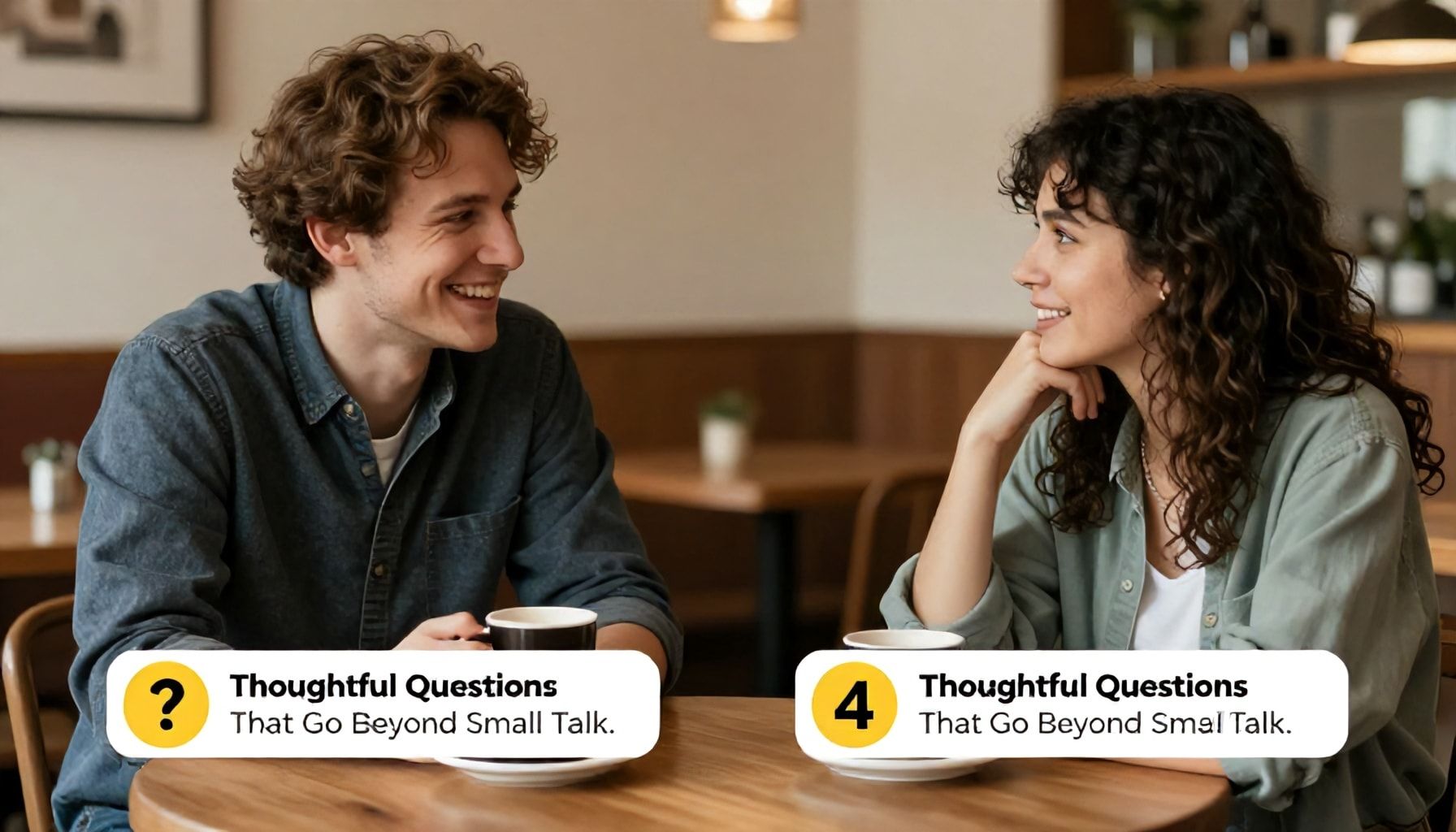
Small talk is the social equivalent of fast food—quick, easy, but ultimately unsatisfying. I’ve seen enough shallow conversations to last a lifetime, and let me tell you, the real magic happens when you skip the weather and dig deeper. These 50 questions aren’t just icebreakers; they’re conversation starters that actually matter. They’re the kind of questions that turn a polite exchange into a meaningful connection.
Here’s how to use them: Don’t fire them off like a quiz. Listen. Follow up. Let the conversation breathe. I’ve structured them into categories so you can pick what fits the moment.
- Values & Beliefs – The bedrock of who someone is.
- Experiences & Memories – Stories that shaped them.
- Hopes & Fears – The raw, unfiltered stuff.
- Hypotheticals & Playful – For when you want to keep it light but still engaging.
Let’s start with Values & Beliefs. These are the questions that reveal what someone truly cares about. They’re not for the first five minutes of a conversation, but when you’re ready to go deeper, they’re gold.
- What’s something you believe that most people disagree with?
- If you could only keep one value from your upbringing, what would it be?
- What’s a cause you’d fight for, even if it cost you something?
- What’s a lesson you had to learn the hard way?
- If you had to describe your moral compass in three words, what would they be?
Now, Experiences & Memories. These are the stories that make people light up—or tear up. They’re the moments that define us. I’ve found that asking about a specific memory (not just “How was your childhood?”) gets you richer answers.
- What’s the most spontaneous thing you’ve ever done?
- Tell me about a time you felt truly proud of yourself.
- What’s a place that feels like home to you, even if it’s not where you grew up?
- What’s the best piece of advice you’ve ever received?
- What’s a failure that taught you more than any success?
And then there are the Hopes & Fears. These are the questions that cut through the noise. They’re not for casual chats, but when you’re ready to go deep, they’re unmatched.
- What’s something you’re afraid you’ll never do?
- If you could guarantee one thing for your future, what would it be?
- What’s a fear you’ve overcome that you’re proud of?
- What’s something you’re secretly afraid of failing at?
- What’s a dream you’ve given up on? Why?
Finally, the Hypotheticals & Playful. These are the questions that keep things light but still engaging. They’re great for when you want to keep the energy up without diving into heavy territory.
- If you could have dinner with any three people, dead or alive, who would they be?
- What’s a skill you wish you had but will never learn?
- If you had to live in a different era, which would you pick?
- What’s the most ridiculous thing you’ve ever done for fun?
- If you could instantly master one instrument, which would it be?
Use these wisely. The best conversations aren’t about checking boxes—they’re about listening, reacting, and letting the other person feel heard. I’ve seen these questions turn strangers into friends, acquaintances into confidants. They work. Now go use them.
These 50 thoughtful questions are more than prompts—they’re bridges to deeper understanding, trust, and connection. Whether shared with a partner, friend, or even yourself, they invite vulnerability, spark meaningful conversations, and reveal the layers of shared humanity we often overlook. The key isn’t just asking the questions but listening with openness, curiosity, and empathy. Let these moments of connection become the foundation for relationships that grow stronger with time. As you reflect on the answers you’ve uncovered, consider this: What’s one new insight that could change how you show up for the people who matter most? The journey of connection never truly ends—it only deepens.