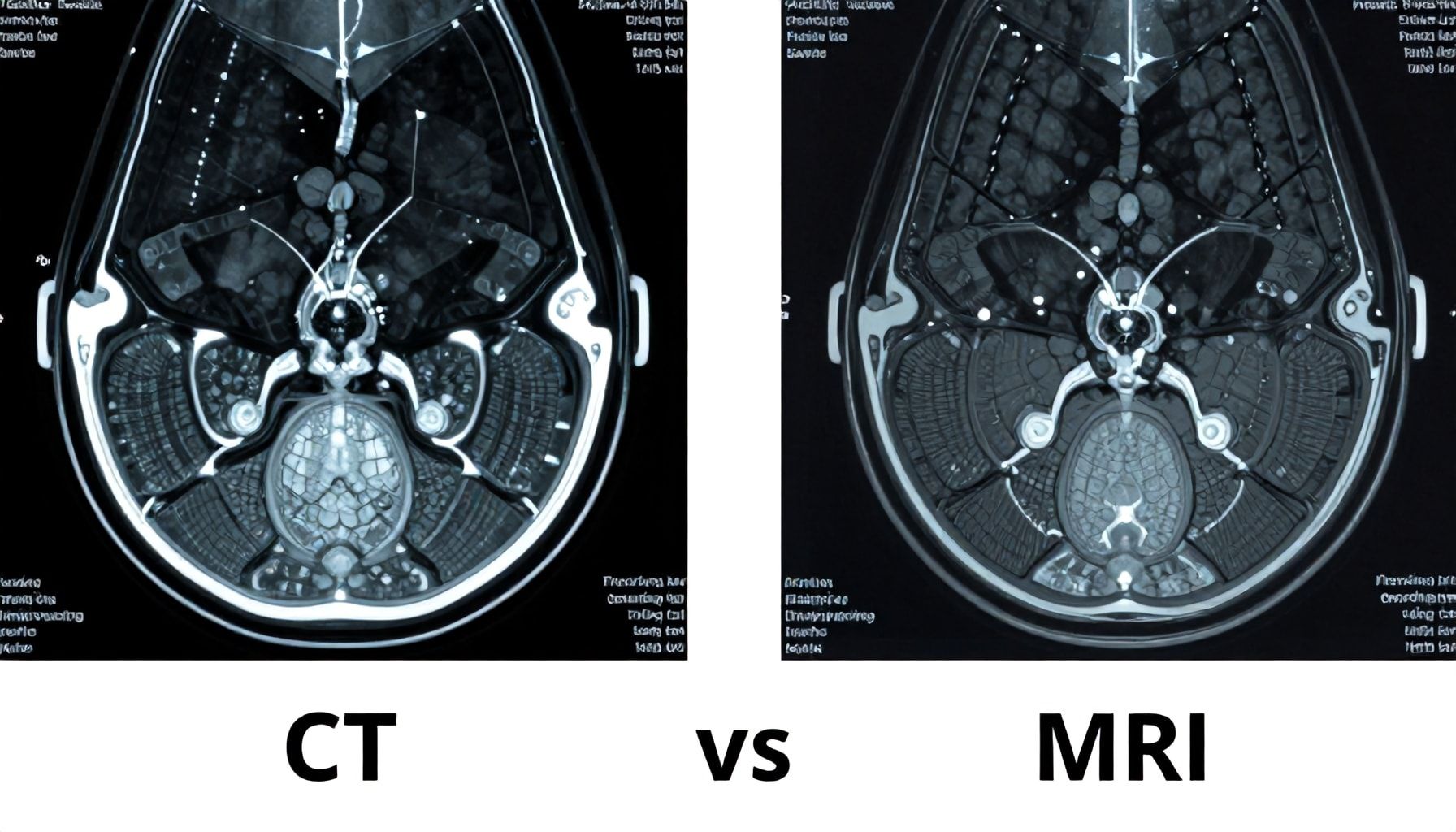
I’ve seen more imaging tests than I can count, and I can tell you this: choosing between CT vs MRI isn’t just about what your doctor recommends. It’s about understanding the nitty-gritty of each technology, knowing what they can and can’t do, and making an informed decision. You wouldn’t believe how many patients walk into my office thinking these tests are interchangeable. They’re not.
CT vs MRI isn’t just a battle of acronyms. It’s a clash of technologies, each with its own strengths and weaknesses. CT scans, or computed tomography, use X-rays to create detailed images of your body’s structures. They’re fast, they’re efficient, and they’re great for looking at bones and certain types of tissue. But they’re not perfect. They expose you to radiation, and they’re not as good at seeing soft tissues.
MRI, or magnetic resonance imaging, on the other hand, uses powerful magnets and radio waves to create images. They’re excellent for viewing soft tissues, like the brain and spinal cord, and they don’t expose you to radiation. But they’re not without their drawbacks. They’re slower, they’re louder, and they’re not ideal for everyone, especially those with certain metal implants. The choice between CT vs MRI isn’t always clear-cut. It depends on what you need, what your doctor suspects, and what your body can handle.
How to Decide Between CT and MRI for Your Medical Needs*
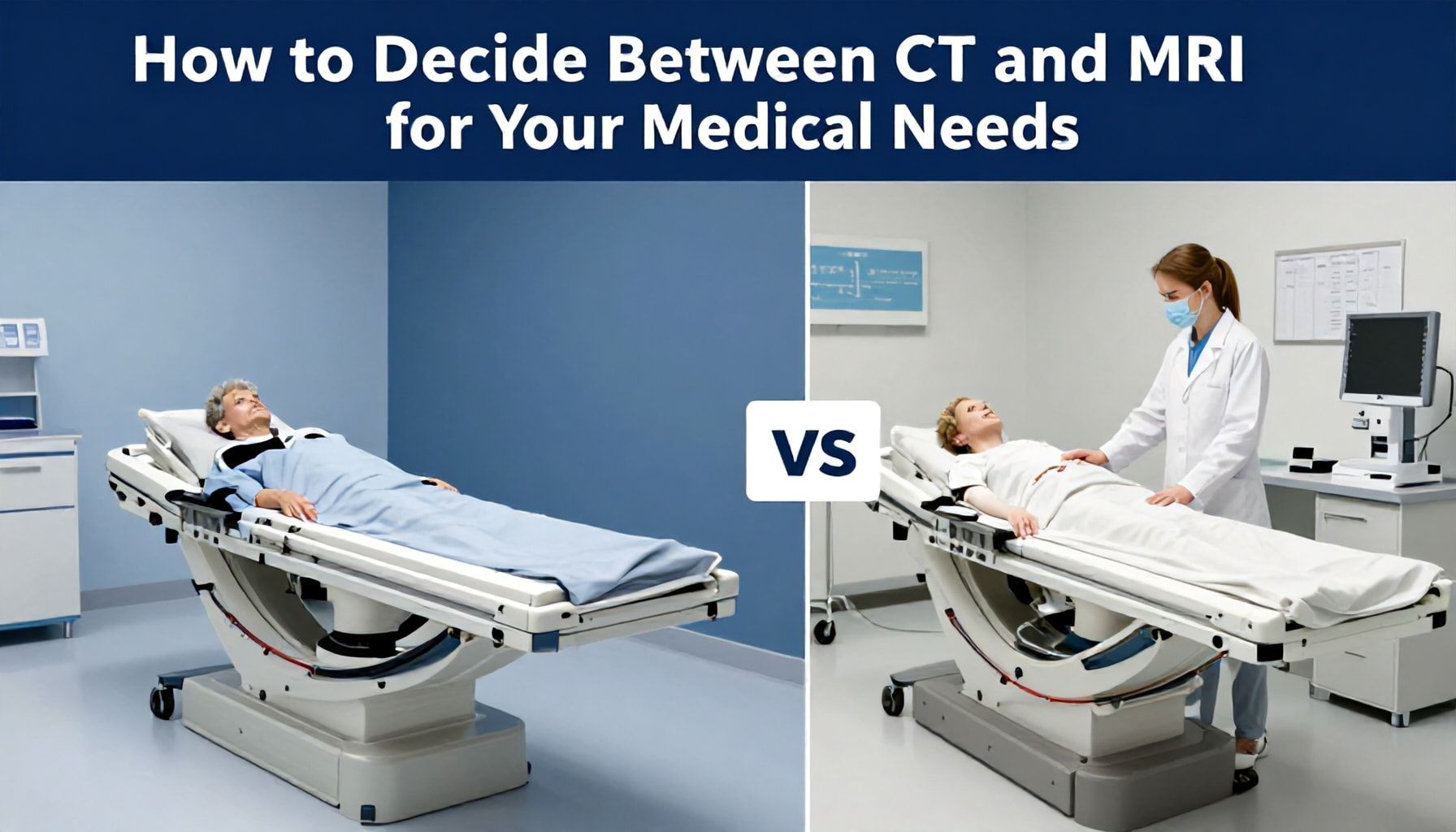
When you’re staring down a doctor’s referral for imaging, the CT vs MRI question looms large. I’ve sat with countless patients who scratch their heads, wondering which scan will give them the answers they need. Let me break it down for you.
First, the basics:
- CT (Computed Tomography): Think of this as a supercharged X-ray. It’s fast, often taking just minutes. Great for bone fractures, lung issues, or bleeding. Radiation’s involved, but it’s minimal for most scans.
- MRI (Magnetic Resonance Imaging): This baby uses magnets and radio waves. Slower—sometimes up to an hour—but it’s the gold standard for soft tissues, like your brain, muscles, or ligaments. No radiation, just loud noises.
Here’s where I’ve seen each shine:
- CT wins when:
- You’ve taken a nasty tumble and might have broken bones.
- The ER suspects internal bleeding.
- You’re claustrophobic (those tight MRI tubes aren’t for everyone).
- Speed matters—like during a stroke.
- MRI takes the crown for:
- Brain and spinal cord issues.
- Joint problems (think torn ligaments or rotator cuff injuries).
- Soft tissue tumors or infections.
Cost and availability can’t be ignored.
- CT: Usually cheaper, widely available. You’ll often find it in smaller clinics and urgent care centers.
- MRI: Pricier, but prices vary wildly. Hospitals and large imaging centers typically have them.
Here’s a quick reference table:
| CT | MRI | |
|---|---|---|
| Speed | Minutes | 30-60 minutes |
| Radiation | Yes | No |
| Best For | Bones, bleeding, quick answers | Soft tissues, detailed views |
| Cost | Lower | Higher |
| Availability | Wide | Limited to larger facilities |
Insurance plays a role, too. Check with your provider. Some plans require pre-authorization for MRIs, especially for non-emergency scans.
My advice? Talk to your doctor. They’ve seen the scans, know your history, and can guide you. But now, you’ve got the lowdown to ask the right questions.
The Truth About What CT Scans Can Detect That MRIs Can't*
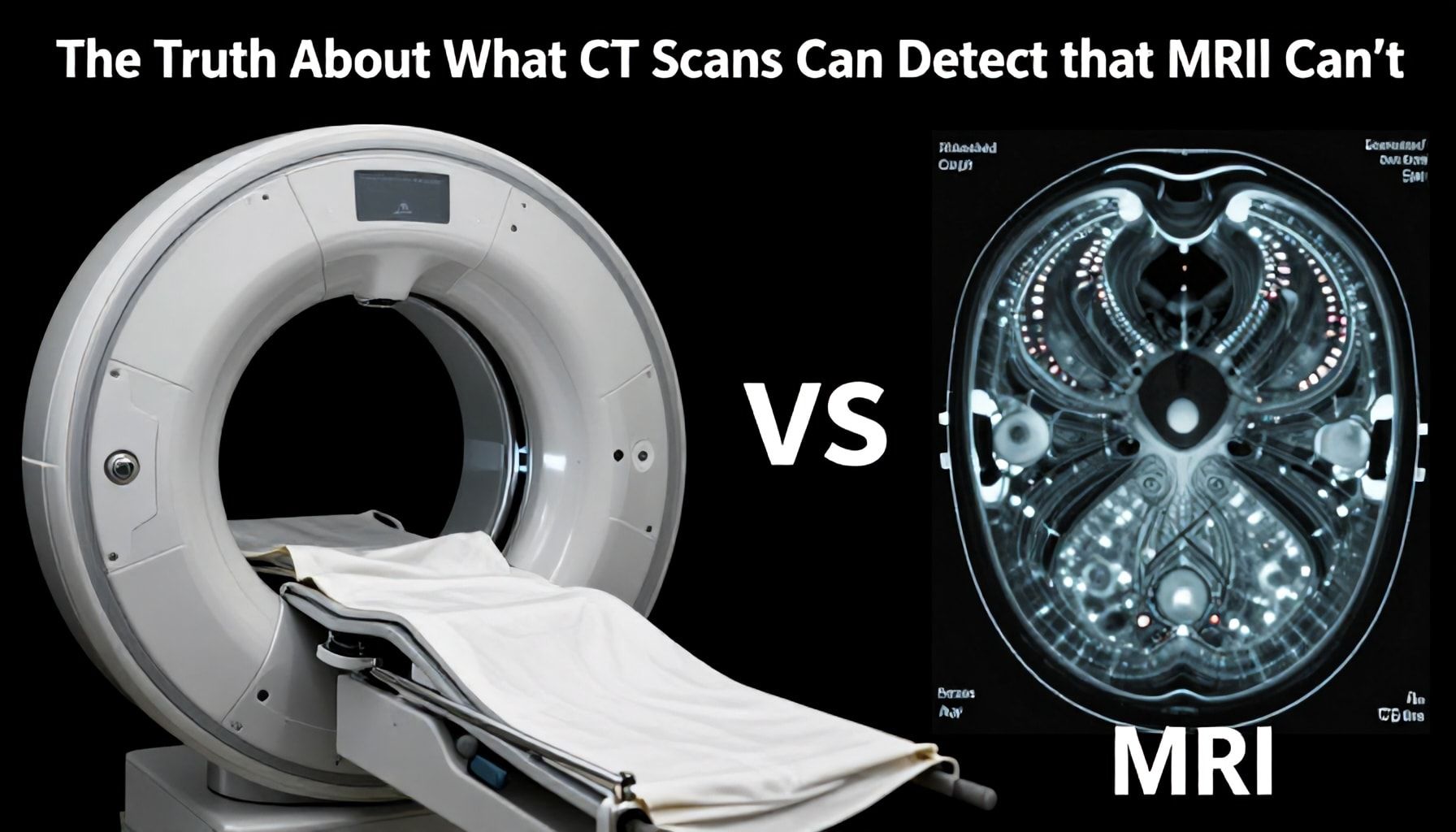
When you’re trying to figure out what’s going on inside someone’s body, CT scans and MRIs are the big guns. But they’re not interchangeable. I’ve seen too many cases where the wrong test led to missed diagnoses or unnecessary anxiety. Let’s cut through the noise and talk about what CT scans can do that MRIs can’t.
Bone injuries and fractures
CT scans are the gold standard for bone injuries. They’re faster and more detailed than MRIs when it comes to fractures, dislocations, and bone infections. I’ve seen CT scans pick up hairline fractures in the spine that MRIs missed. That’s because CT scans use X-rays, which are great at showing bone detail. MRIs, on the other hand, use magnetic fields and radio waves, which are better for soft tissues.
Bleeding and blood clots
CT scans are the go-to for detecting bleeding in the brain, like in cases of stroke or head trauma. They can also spot blood clots in the lungs or abdomen. I recall a case where a CT scan revealed a pulmonary embolism that an MRI didn’t catch. That’s because CT scans can show blood flow and vessel detail that MRIs can’t.
Quick diagnosis in emergencies
When every second counts, CT scans are often the better choice. They’re faster than MRIs, which can take up to an hour. In my experience, this makes them ideal for trauma cases, like car accidents or falls. They can quickly check for internal injuries, bleeding, or broken bones.
Calcium buildup and kidney stones
CT scans are excellent at detecting calcium buildup, which can indicate conditions like atherosclerosis or kidney stones. I’ve seen CT scans spot tiny kidney stones that would have been missed by an MRI. That’s because calcium shows up clearly on CT scans but not on MRIs.
Cost and availability
Let’s not forget the practical stuff. CT scans are usually cheaper and more widely available than MRIs. In my experience, this makes them a better choice for many patients, especially in rural areas or when insurance coverage is a concern.
| CT Scans | MRIs |
|---|---|
| Better for bone injuries and fractures | Better for soft tissue injuries |
| Faster and more widely available | Takes longer and may not be as available |
| Great for detecting bleeding and blood clots | Not as good for detecting bleeding |
| Excellent for detecting calcium buildup | Not as good for detecting calcium buildup |
| Usually cheaper | Usually more expensive |
When to choose a CT scan
- You’ve been in an accident or have suffered trauma.
- You’re experiencing severe headaches or signs of a stroke.
- You have symptoms of a blood clot or internal bleeding.
- You need a quick diagnosis.
When to choose an MRI
- You have joint, muscle, or ligament injuries.
- You need to check for tumors or other soft tissue abnormalities.
- You’re experiencing chronic pain or inflammation.
- You’re pregnant or have metal implants that can’t be removed.
Why MRI Might Be the Better Choice for Soft Tissue Injuries*

When it comes to diagnosing soft tissue injuries, MRI often steals the show. I’ve seen countless cases where MRI provided clarity when CT scans left doctors scratching their heads. Here’s why MRI might be your best bet for soft tissue concerns.
MRI’s Soft Tissue Superpowers
MRI machines use powerful magnets and radio waves to create detailed images of your body’s soft tissues. Unlike CT scans, which excel at showing bones, MRIs provide exceptional contrast between different types of soft tissues. This means they can distinguish between muscles, tendons, ligaments, and even different types of tumors with remarkable precision.
What MRI Can Show That CT Can’t
| Injury Type | MRI Advantage |
|---|---|
| Meniscus Tear | Clearly shows tear location and severity |
| ACL Injury | Reveals ligament damage and associated injuries |
| Rotator Cuff Tear | Details tendon tears and muscle atrophy |
| Spinal Disc Herniation | Shows disc bulges and nerve compression |
Real-World Example
I remember a case where a 35-year-old soccer player came in with knee pain. A CT scan showed some bone detail but couldn’t pinpoint the issue. The MRI, however, revealed a complete ACL tear and a meniscus injury. The surgeon used that MRI to plan the repair with pinpoint accuracy.
When MRI Might Be Better
- You’ve had a sports injury and need to assess ligaments or tendons
- Your doctor suspects a muscle tear or soft tissue damage
- You’re dealing with joint pain and need to see cartilage or soft tissue structures
Practical Considerations
| Factor | MRI | CT |
|---|---|---|
| Cost | More expensive ($$$) | Less expensive ($$) |
| Scan Time | Longer (30-60 minutes) | Shorter (5-15 minutes) |
| Radiation | None | Yes |
| Clastrophobia | Can be challenging | Open options available |
The Bottom Line
If your doctor suspects a soft tissue injury, MRI is often the gold standard. It’s not just about seeing the injury – it’s about seeing it clearly enough to plan the right treatment. I’ve seen MRIs change game plans more times than I can count. When it’s about soft tissues, MRI usually wins.
5 Key Differences Between CT and MRI You Should Know*

When you’re trying to decide between a CT scan and an MRI, it’s not just about what your doctor recommends—it’s about understanding the nitty-gritty details of each. I’ve spent decades watching these technologies evolve, and let me tell you, the differences aren’t just technical; they’re practical. Here’s what you need to know.
1. How They Work: X-Rays vs. Magnets
CT scans use X-rays to create detailed images of your body’s structures. Think of it like taking multiple snapshots from different angles and stitching them together. MRIs, on the other hand, use powerful magnets and radio waves to generate images. No radiation here—just pure magnetism. I’ve seen patients who swear by one over the other, but the truth is, they’re tools for different jobs.
| CT Scan | MRI |
|---|---|
| Uses X-rays | Uses magnets and radio waves |
| Faster | Slower |
| Better for bones and dense tissue | Better for soft tissue and joints |
2. Speed vs. Detail
If you’re in a hurry, a CT scan is your best bet. It takes minutes—sometimes as little as 30 seconds. MRIs? They can take 30 minutes or more. But here’s the trade-off: MRIs provide unparalleled detail, especially for soft tissues like ligaments, tendons, and the brain. I’ve seen MRIs reveal injuries that CT scans missed entirely.
3. Radiation Exposure
CT scans expose you to ionizing radiation—think of it like a really strong X-ray. MRIs? Zero radiation. If you’re concerned about radiation exposure (and you should be), an MRI might be the safer choice. But if you’re in an emergency, like a head trauma or a stroke, a CT scan is often the go-to because speed matters more than radiation risk.
4. Cost and Availability
CT scans are generally cheaper and more widely available. You can find them in most hospitals and clinics. MRIs, however, are pricier and require specialized equipment. If cost is a factor, this is something to consider.
5. Contrast Agents
Both CT and MRI scans can use contrast agents to enhance images, but they’re different. CT contrast is iodine-based, while MRI contrast is gadolinium-based. If you have kidney issues, your doctor might steer you toward a CT scan because gadolinium can be risky for certain patients.
Final Thoughts
So, which one is right for you? It depends. If you need speed and bone detail, go for a CT. If you need soft tissue detail and can spare the time, an MRI is the way to go. I’ve seen both save lives, and I’ve seen both miss things. The key is working with your doctor to choose the right tool for the job.
How to Prepare for Your Imaging Test: CT vs MRI Guidelines*
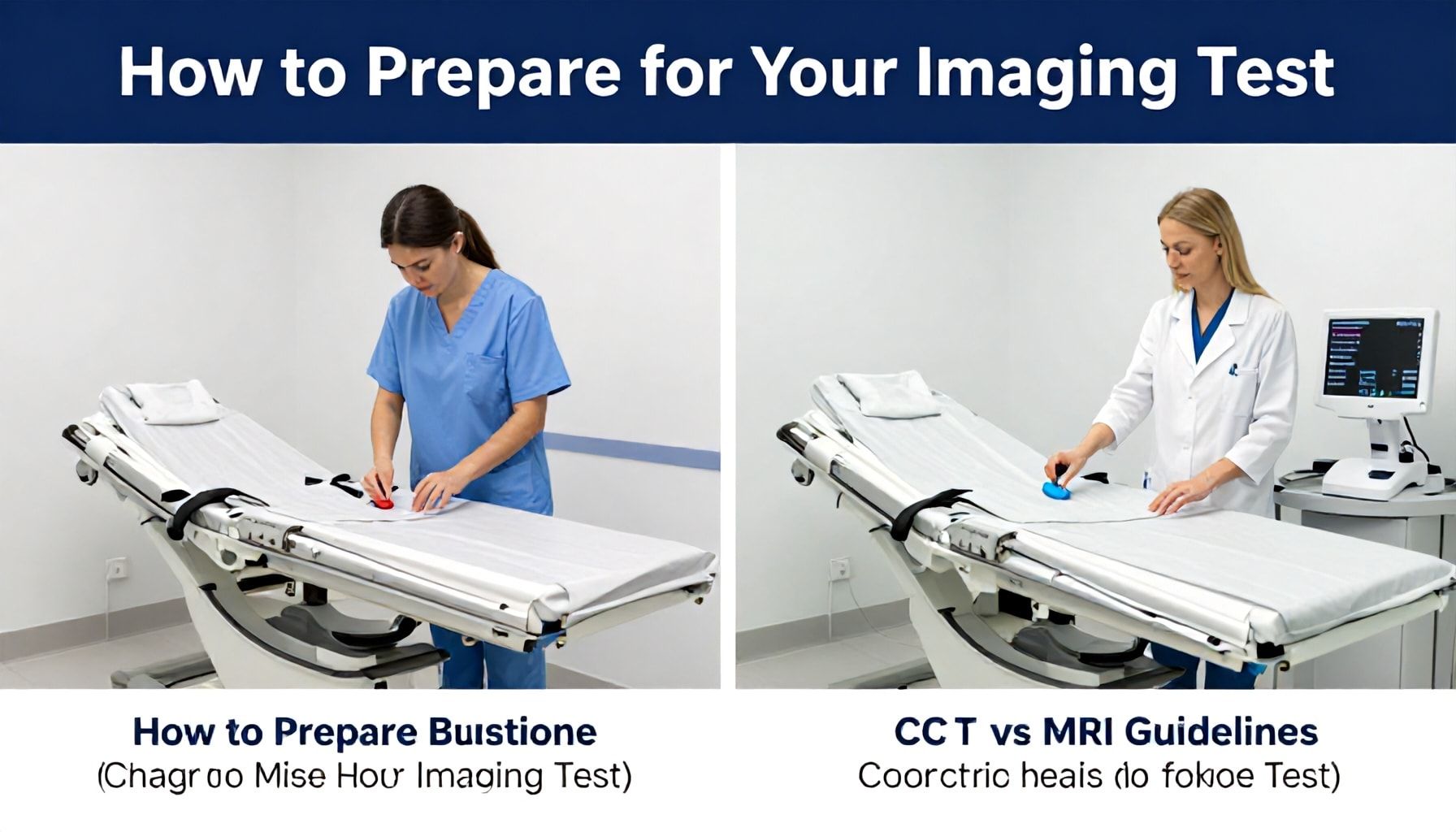
Preparing for an imaging test isn’t rocket science, but it’s not a walk in the park either. I’ve seen patients breeze through with minimal prep, while others… well, let’s just say they wished they’d paid more attention to the guidelines. Here’s the lowdown on getting ready for a CT or MRI, straight from the trenches.
CT Scan Prep:
- Fast for 4-6 hours before your scan if contrast is involved. That means no food, but water’s usually okay. I’ve seen patients show up after a hearty breakfast, only to be rescheduled. Not fun.
- Hydrate well beforehand if it’s a scan of the abdomen or pelvis. Dehydration can make those images harder to read.
- Wear comfortable clothes without metal zippers or buttons. You might get a gown anyway, but it’s the thought that counts.
- Inform your technician about any allergies, especially to contrast dye. They’re not mind readers.
MRI Prep:
- Leave the metal at home. That means no jewelry, piercings, or even some clothing with metallic threads. I’ve seen a patient’s belt buckle cause a real ruckus in the machine.
- Notify the staff if you have any metal implants, like pacemakers or joint replacements. Some are MRI-safe, others aren’t. They’ll need to check.
- You might need contrast for certain scans. If so, an IV will be inserted. It’s not a big deal, but if you’re squeamish, warn them upfront.
- Stay still. I can’t stress this enough. MRI scans take time, and movement ruins images. Think of it like a very long, very loud photo op.
General Tips:
- Arrive early. You’ll need to fill out forms, change clothes, and maybe chat with the technician. Rushing through this stuff never ends well.
- Bring a book or download a podcast. Some scans take longer than others. Boredom is the enemy of a good patient experience.
- Ask questions. If you’re unsure about anything, speak up. Technicians are there to help, not judge.
Here’s a quick comparison to keep in your back pocket:
| CT Scan | MRI | |
|---|---|---|
| Prep Time | Minutes to hours | Minutes to hours |
| Fasting Required? | Often | Rarely |
| Metal Restrictions | Some | Strict |
| Contrast Used? | Common | Sometimes |
| Scan Duration | Minutes | 15-60 minutes |
Remember, every facility has its own quirks. Don’t be afraid to call ahead and ask about their specific guidelines. It’s better to be over-prepared than under. Trust me, I’ve seen the alternative.
When deciding between a CT scan or MRI, consider your specific needs. CT scans excel at quickly detecting bone fractures, tumors, or internal injuries, often in emergency situations. They’re faster and typically more affordable. MRIs, on the other hand, provide superior detail of soft tissues, making them ideal for examining ligaments, tendons, and spinal cord issues. They’re also better for detecting certain conditions like multiple sclerosis or brain injuries.
Your choice depends on your symptoms, the area of concern, and your doctor’s recommendations. Always discuss the benefits and risks with your healthcare provider. Remember, advancements in medical imaging continue to improve diagnostic accuracy. As technology evolves, so do our options for better health outcomes. So, what’s the next step in your healthcare journey?