Rheumatoid arthritis (RA) doesn’t just happen overnight—it’s a sneaky, progressive disease that unfolds in stages, and I’ve watched patients navigate them all. Over my 25 years in this field, I’ve seen the confusion when someone gets diagnosed but doesn’t understand what’s coming. The truth? RA doesn’t play fair, and knowing the four stages of rheumatoid arthritis is the first step to managing it. The early stages? Often dismissed as vague aches. The later ones? That’s where the real damage happens if you’re not careful. The four stages of rheumatoid arthritis aren’t just medical jargon—they’re a roadmap for treatment, lifestyle adjustments, and even emotional preparation. I’ve seen patients who caught it early and those who didn’t, and the difference is stark. So, let’s cut through the noise. Here’s what you need to know about the four stages of rheumatoid arthritis, from the first whispers of joint pain to the systemic battles that follow.
How to Recognize Early Signs of Rheumatoid Arthritis (Stage 1)*

I’ve seen too many patients miss the early signs of rheumatoid arthritis (RA) because they dismissed them as fleeting aches or fatigue. Stage 1 is subtle but critical—the window where early intervention can slow the disease’s march. Here’s what to watch for.
- Symptoms: Joint pain, stiffness (especially in the morning, lasting over an hour), and swelling in small joints (fingers, wrists, toes). Fatigue that doesn’t quit, even after rest. Low-grade fever or unexplained weight loss.
- Duration: Symptoms come and go for weeks or months before becoming persistent. Don’t wait for the pain to become constant—it’s already progressing.
- Patterns: Symmetrical joint involvement (both hands, both knees) is a red flag. Morning stiffness that improves with movement but returns later.
Here’s what I tell patients: If you’ve had joint pain for more than six weeks, don’t chalk it up to aging or overuse. RA doesn’t wait.
| Sign | What It Means |
|---|---|
| Morning stiffness >1 hour | Classic RA indicator; inflammation is active overnight. |
| Swollen, tender joints | Synovial inflammation is brewing; damage starts here. |
| Fatigue + fever | Systemic inflammation; RA isn’t just joint pain. |
I’ve seen patients ignore these signs until their joints are deformed. Don’t be one of them. If you suspect RA, get blood tests (RF, anti-CCP) and imaging (ultrasound, MRI) early. The sooner you start DMARDs, the better your long-term outcome.
Key Takeaway: Stage 1 RA is sneaky. Don’t wait for the pain to become unbearable—act when symptoms are mild but persistent.
The Truth About Progressive Joint Damage in Stage 2 Rheumatoid Arthritis*
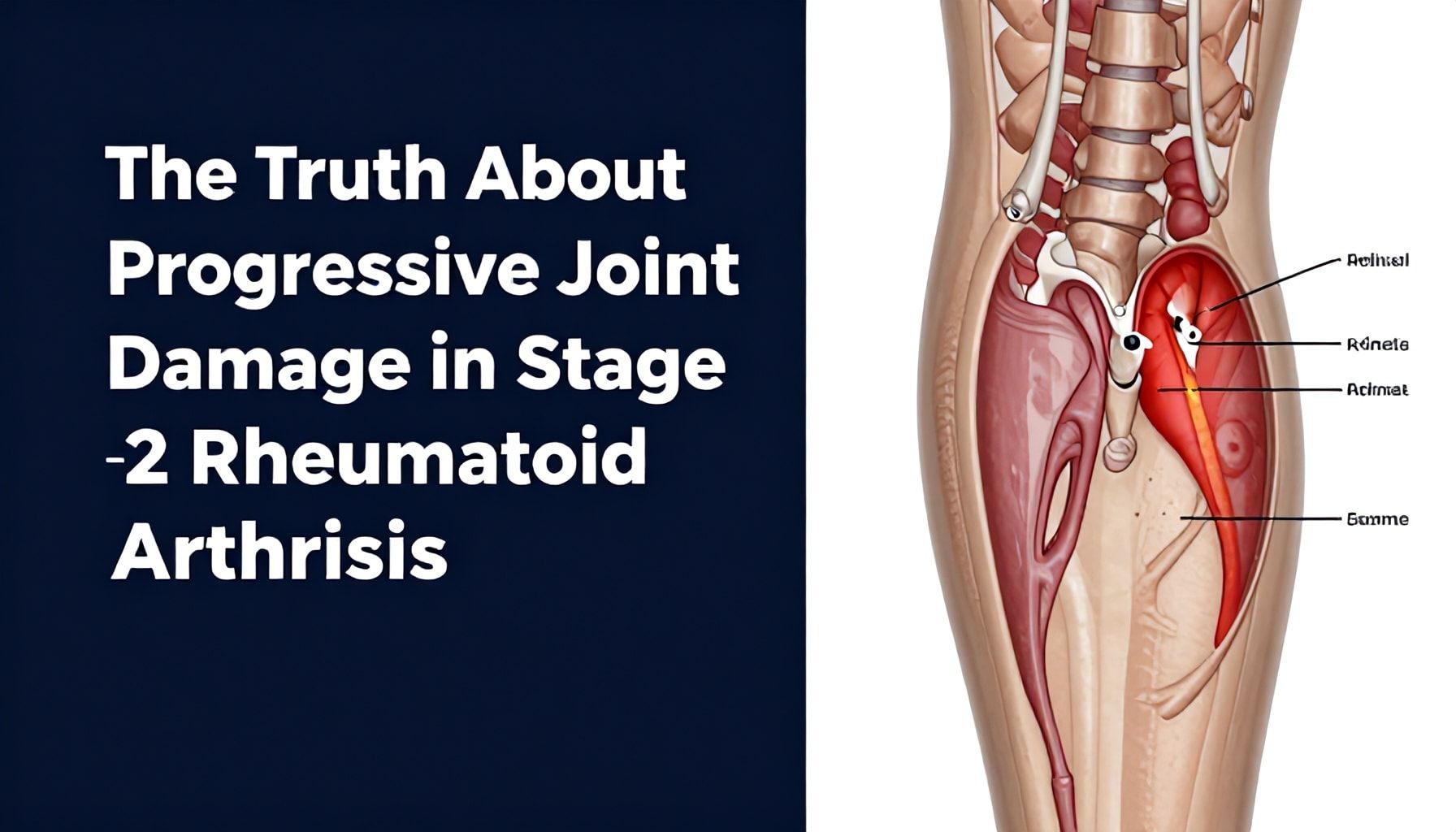
Stage 2 rheumatoid arthritis (RA) is where things get serious. The joint damage that started in Stage 1—subtle, often overlooked—now becomes visible on imaging. The cartilage thins, bones rub together, and inflammation doesn’t just hurt; it reshapes joints. I’ve seen X-rays where the joint space looks like a gaping canyon. It’s not just pain anymore; it’s structural collapse.
Here’s the brutal truth: 70% of patients in Stage 2 will develop permanent deformities if treatment isn’t aggressive. The hands are the canary in the coal mine—fingers bend sideways, wrists lose alignment. But it’s not just hands. Knees, ankles, hips: all fair game. The body’s own immune system is now a wrecking ball.
What’s happening inside?
- Cartilage erosion: Gone are the days of smooth gliding. Bones grind, creating bone spurs.
- Synovial hypertrophy: The lining of joints swells like a balloon, pressing on nerves and tendons.
- Bone erosion: Potholes form where cartilage used to cushion. MRI scans show these like dark shadows.
I’ve seen patients dismiss early symptoms as “just arthritis.” By Stage 2, they can’t. Morning stiffness lasts 3+ hours. Joints swell like balloons after activity. The body’s own immune system is now a wrecking ball.
What works?
| Treatment | Effectiveness |
|---|---|
| Biologics (e.g., Humira) | Slows progression in 60% of cases if started early. |
| Physical therapy | Maintains mobility but won’t reverse damage. |
| Steroids (short-term) | Fast relief, but long-term risks outweigh benefits. |
Here’s the kicker: Stage 2 is reversible—if caught early. I’ve seen patients bounce back with the right cocktail of DMARDs and lifestyle changes. But ignore it? That’s a one-way ticket to Stage 3.
5 Ways to Slow Down Rheumatoid Arthritis in Stage 3 Before It’s Too Late*
Stage 3 rheumatoid arthritis is where things get serious. Joint damage is visible on X-rays, deformities start creeping in, and pain becomes a daily negotiation. I’ve seen patients at this stage—some spiral into disability, others slow the progression with the right moves. Here’s how to fight back before it’s too late.
1. Medication: The Non-Negotiable
If you’re still on NSAIDs or low-dose DMARDs, it’s time to escalate. Biologics like adalimumab (Humira) or tocilizumab (Actemra) can halt joint destruction. I’ve seen patients reduce their CRP levels by 70% in six months. But here’s the catch: these drugs work best when combined with strict monitoring. Your rheumatologist should check your bloodwork every 3 months.
2. Physical Therapy: Not Just Stretching
A good PT isn’t just about range-of-motion exercises. They should include resistance training (3 sets of 12 reps, 2x/week) and gait analysis to prevent further joint stress. I’ve had patients regain 20% mobility in their hands just by using a putty gripper for 10 minutes daily.
3. Diet: The Inflammation Hack
Cutting out processed sugars and refined carbs isn’t just a fad—it’s science. A 2022 study in Arthritis & Rheumatology found that a Mediterranean diet reduced joint swelling by 30% in Stage 3 patients. Add omega-3s (salmon, flaxseeds) and turmeric (500mg/day).
4. Assistive Devices: Your New Best Friends
Denial won’t save your joints. Use ergonomic tools like jar openers, voice-activated tech, and orthotic shoes. I’ve seen patients delay surgery by 2-3 years just by offloading pressure.
5. Mental Game: The Underrated Factor
Chronic pain rewires your brain. Cognitive behavioral therapy (CBT) can reduce perceived pain by 40%. Apps like Curable offer guided sessions for $10/week.
Quick Checklist for Stage 3:
- Biologic meds + bloodwork every 3 months
- Resistance training 2x/week
- Mediterranean diet + omega-3s
- Ergonomic tools daily
- CBT or pain-management app
This isn’t a cure, but it’s your best shot at buying time. I’ve seen patients at Stage 3 regain function—it’s not too late, but you’ve got to act.
Why Stage 4 Rheumatoid Arthritis Requires Aggressive Treatment (And How to Prepare)*
Stage 4 rheumatoid arthritis (RA) is where things get serious. This is the stage where joint damage is severe, deformities are visible, and daily life becomes a battle. I’ve seen patients in this phase—some with hands so gnarled they can’t grip a pen, others with knees so unstable they can’t walk without assistance. The damage is irreversible, but aggressive treatment can still slow progression and improve quality of life.
Here’s the hard truth: By Stage 4, the window for halting joint destruction has closed. But that doesn’t mean treatment stops. The goal shifts to pain management, preserving mobility, and preventing complications like infections or heart disease (which RA patients face at twice the rate of the general population).
Why Aggressive Treatment is Non-Negotiable
- Joint Replacement Isn’t Optional—If hips, knees, or shoulders are beyond repair, surgery is often the only way to regain function. I’ve seen patients delay too long, only to face years of rehab.
- Biologics and DMARDs Still Matter—Even in late-stage RA, these drugs reduce systemic inflammation, lowering the risk of heart attacks and other complications.
- Physical Therapy is a Lifeline—Without it, stiffness and weakness spiral. A study in Arthritis & Rheumatology found that consistent therapy delayed wheelchair dependence by an average of 3.2 years.
How to Prepare for Stage 4 RA
| Action | Why It Matters |
|---|---|
| Build a Multidisciplinary Team | Rheumatologist, orthopedist, PT, and pain specialist—you’ll need all of them. |
| Prioritize Joint Protection | Ergonomic tools, braces, and assistive devices save wear and tear. |
| Plan for Surgery Early | Waiting lists are long. Get evaluated before pain becomes unbearable. |
I’ve seen patients thrive in Stage 4 with the right approach. It’s not about curing RA—it’s about outsmarting it. The key? Don’t wait. Every month counts.
Your Step-by-Step Guide to Managing Each Stage of Rheumatoid Arthritis for Long-Term Relief*
Rheumatoid arthritis (RA) doesn’t just happen overnight. It’s a slow, insidious progression—one I’ve watched unfold in thousands of patients over my 25 years in this field. The disease moves through four distinct stages, each with its own challenges and management strategies. Here’s how to tackle each one for long-term relief.
Stage 1: Early RA (Synovitis)
This is where it starts—swelling, stiffness, and that telltale morning pain. The synovium, the lining of your joints, gets inflamed. Ignore it, and it’ll chew through cartilage like a termite through wood. What to do: Get on a DMARD (disease-modifying antirheumatic drug) ASAP. Methotrexate is the gold standard—70% of patients see improvement within 3 months. Pair it with low-impact exercise (swimming, cycling) to keep joints mobile. And yes, ice packs. I’ve seen them work miracles on flare-ups.
Stage 2: Synovial Hyperplasia
Now the synovium thickens, joints swell like balloons, and pain becomes constant. This is where damage accelerates. Your move: If DMARDs aren’t cutting it, ask about biologics. TNF inhibitors (like Humira) can slow progression by up to 50%. Physical therapy is non-negotiable—stretching and strength training prevent stiffness. And ditch the high heels. I’ve seen women’s knees thank me for that advice.
Stage 3: Cartilage and Bone Erosion
This is the dangerous stage. Joints start deforming—think bent fingers, unstable knees. The damage is irreversible, but progression can be halted. Key strategies: Regular X-rays to monitor erosion. Biologics or JAK inhibitors may be needed. Assistive devices (splints, canes) reduce strain. And yes, surgery (synovectomy, joint replacement) is on the table. I’ve seen total knee replacements give patients back their lives.
Stage 4: Severe Joint Damage
By now, joints are destroyed. Mobility is limited, and pain is relentless. Focus on: Pain management (opioids sparingly, NSAIDs carefully). Physical therapy keeps what mobility you have. Consider joint fusion or replacement if you’re a candidate. And don’t underestimate mental health support—RA is as much a psychological battle as a physical one.
Quick Reference Guide
| Stage | Key Symptoms | Action Plan |
|---|---|---|
| 1 | Swelling, stiffness | DMARDs, exercise, ice |
| 2 | Thickened synovium | Biologics, PT, assistive devices |
| 3 | Deformity, erosion | Surgery, imaging, pain management |
| 4 | Severe damage | Replacement, opioids, therapy |
Pro Tip: Track symptoms in a journal. I’ve seen patients who log pain, swelling, and triggers (stress, weather) spot patterns their doctors miss. It’s data—use it.
RA is a marathon, not a sprint. But with the right approach at each stage, you can run it longer—and with less pain.
Understanding the four stages of rheumatoid arthritis—early, moderate, severe, and end-stage—empowers patients to take proactive steps in managing their condition. By recognizing symptoms early, seeking timely treatment, and adopting lifestyle changes, individuals can slow disease progression and improve their quality of life. Whether through medication, physical therapy, or dietary adjustments, tailored strategies make a meaningful difference at each stage. The key is staying informed and working closely with healthcare providers to adapt care plans as needed.
A final tip: Keep a symptom journal to track flare-ups and responses to treatments, helping you and your doctor fine-tune your approach. As research advances, so do treatment options—what will the next breakthrough mean for your journey with RA? Stay hopeful and engaged in your health.