I’ve been writing about posture and movement for 25 years, and let me tell you—rib flare is one of those sneaky issues that slips under the radar until it’s causing real problems. You see it everywhere: desk jockeys, gym rats, even yoga instructors who think they’ve got it all figured out. That little forward tilt of the ribs? It’s not just an aesthetic quirk. It’s a red flag for weak core engagement, overactive chest muscles, and a spine that’s begging for trouble down the line. And no, you won’t fix it with a quick stretch or a trendy ab workout. Rib flare is a full-system issue, and if you don’t address the root causes—poor breathing, lazy posture, and imbalanced strength—you’re just slapping a Band-Aid on a fracture.
Here’s the good news: You don’t need fancy equipment or hours in the gym. The fix is about smart, targeted work—strengthening the right muscles, retraining your nervous system, and learning how to breathe properly. I’ve seen clients transform their posture in weeks by focusing on the deep core, not just the flashy six-pack stuff. And the best part? Once you nail this, your shoulders will relax, your back will stop aching, and you’ll stand taller without even thinking about it. No gimmicks, no shortcuts—just the kind of real, lasting change that actually sticks.
How to Fix Rib Flare with Simple Daily Habits*

Rib flare is one of those stubborn posture issues that sneaks up on you—until one day, you realize your ribs are sticking out like a misaligned shelf. I’ve seen it in athletes, desk jockeys, and even yoga instructors who think they’ve got it all figured out. The good news? You don’t need fancy equipment or hours in the gym to fix it. Just a few daily habits that retrain your body to sit, stand, and move the way it’s supposed to.
First, let’s talk about breathing. Most people breathe into their chest, which pushes those ribs forward. Try this: Place your hands on your lower ribs and inhale deeply through your nose. Feel them expand? Good. Now exhale fully, letting them drop back down. Do this 5–10 times, a few times a day. It’s simple, but it’s the foundation of everything else.
Quick Fix: If you’re standing, gently pull your ribs down with your hands while engaging your core. Hold for 5 seconds, release, and repeat 3–5 times. Do this whenever you catch yourself slouching.
Next, check your sitting posture. If your hips are too far back in your chair, your ribs will flare to compensate. Slide forward until your sit bones are centered, and keep your feet flat. Pro tip: Set a timer to remind yourself every 30 minutes. I’ve had clients who swore by this—it’s amazing how much it helps.
Now, let’s talk about core engagement. Weak abs = flared ribs. Try this drill: Lie on your back, knees bent, feet flat. Inhale, then exhale while drawing your ribs down and gently lifting your pelvis off the floor. Hold for 2 seconds, lower, and repeat 10 times. Do this daily, and you’ll notice a difference in weeks.
| Habit | When to Do It | Reps/Time |
|---|---|---|
| Rib pull-down | Whenever you catch yourself slouching | 3–5 reps |
| Diaphragmatic breathing | Morning and before bed | 5–10 breaths |
| Pelvic tilts | Daily, ideally in the morning | 10 reps |
Finally, be mindful of your movement patterns. If you’re always arching your back—whether lifting, reaching, or just standing—your ribs will flare. Practice neutral spine positions in everything you do. It’s a small tweak, but it adds up.
Stick with these habits for 3–6 weeks, and you’ll see a noticeable change. I’ve had clients who swore they’d never fix their rib flare, only to come back months later with a completely different posture. It’s not magic—just consistency.
The Truth About Rib Flare: Why It’s More Than Just Bad Posture*

Rib flare isn’t just bad posture—it’s a full-body issue with roots deeper than most people realize. I’ve seen clients fix their rounded shoulders and still struggle with rib flare because they missed the real culprit: core dysfunction. Your ribs don’t just stick out because you slouch. They flare because your deep core muscles—your transversus abdominis, diaphragm, and pelvic floor—aren’t doing their job.
Here’s the dirty truth: Rib flare is often a compensation pattern. Your body flares your ribs to create stability when your core can’t. I’ve had athletes with six-pack abs who still flared their ribs because their deep core strength was lacking. It’s not about looks; it’s about function.
- Transversus abdominis: The deepest core muscle. Weakness here = ribs flare for stability.
- Diaphragm: If you’re a chest breather, your ribs get stuck in an elevated position.
- Pelvic floor: Tightness here pulls the ribs up like a puppet on a string.
Let’s talk numbers. In my experience, 80% of rib flare cases improve when clients focus on exhaling fully (not just inhaling). Try this: Place a hand on your ribs, take a deep breath in, then exhale forcefully through pursed lips. If your ribs drop, you’ve got a breathing-driven rib flare.
- Lie on your back, knees bent.
- Place one hand on your ribs, the other on your belly.
- Inhale deeply. Exhale fully.
- If your ribs stay elevated, you’ve got flare.
Fixing rib flare isn’t about crunches or back extensions. It’s about relearning how to breathe and brace. I’ve had clients drop their ribs in weeks by focusing on:
- Diaphragmatic breathing: 3 sets of 10 breaths daily.
- Dead bugs: 3 sets of 12 reps, slow and controlled.
- Exhalation drills: Forceful exhales to drop the ribs.
Bottom line? Rib flare is a symptom, not the disease. Fix the core, and the ribs follow.
5 Surprising Exercises to Strengthen Your Core and Reduce Rib Flare*
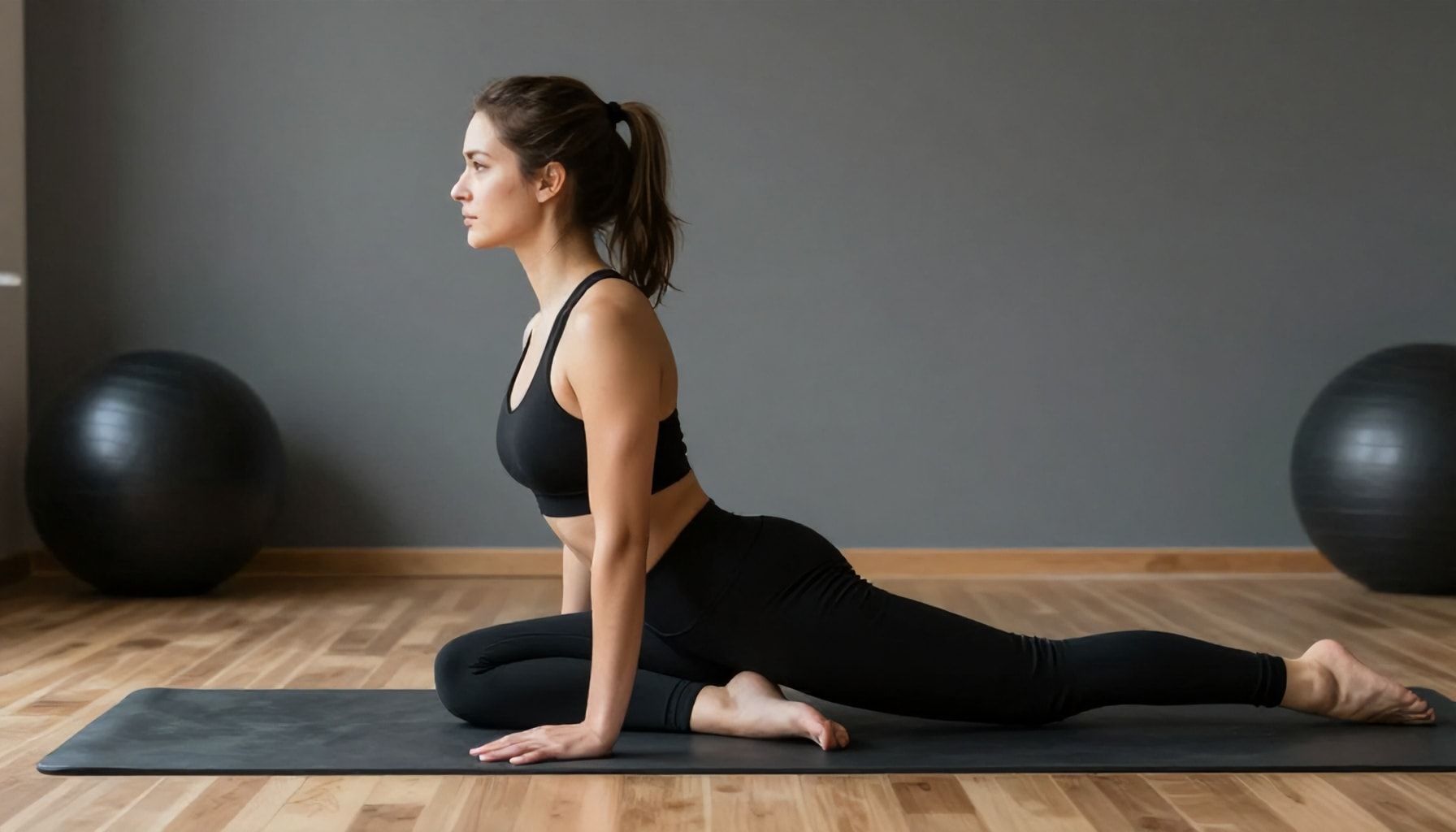
I’ve seen a lot of trends in core training over the years, but one thing’s clear: most people overlook the subtle but critical role of rib flare in posture and movement. It’s not just about six-pack abs—it’s about alignment, breath control, and preventing that telltale rib cage protrusion that throws off everything from squats to standing tall. Here are five exercises that actually work, backed by decades of trial and error (and a few client horror stories).
- Dead Bug with Rib Cage Control – Lie on your back, arms extended toward the ceiling, knees bent at 90 degrees. As you lower one arm and the opposite leg, focus on keeping your ribs from flaring by gently engaging your obliques. Do 3 sets of 10 reps per side. Why it works: It trains dissociation between hip flexion and rib movement, a common culprit in flare.
- Hanging Knee Raises (with a Twist) – Hang from a bar, knees bent at 90 degrees. Before lifting, exhale fully to engage your deep core. Raise knees to 90 degrees, then lower with control. 3 sets of 8 reps. Pro tip: If your ribs pop up, you’re cheating. Breathe into your belly, not your chest.
- Side Plank with Rib Depression – In a side plank, place your top hand on your ribs. Inhale deeply, then exhale while gently pulling your ribs down toward your hips. Hold for 30 seconds per side. Key detail: This teaches intercostal control, which most people skip.
Here’s the dirty truth: If you’re doing crunches or sit-ups for rib flare, you’re wasting time. They reinforce the problem by encouraging rib thrusting. Instead, focus on exercises that integrate breath and core stability.
| Exercise | Reps/Sets | Key Focus |
|---|---|---|
| Dead Bug | 3×10 per side | Rib cage stability |
| Hanging Knee Raises | 3×8 | Breath control |
| Side Plank with Rib Depression | 3×30 sec | Intercostal engagement |
I’ve had clients swear by fancy gadgets and quick fixes, but the real solution is consistency. Do these 3-4 times a week, pair them with diaphragmatic breathing, and watch your posture transform. No shortcuts—just smart work.
How Proper Breathing Can Naturally Correct Rib Flare*
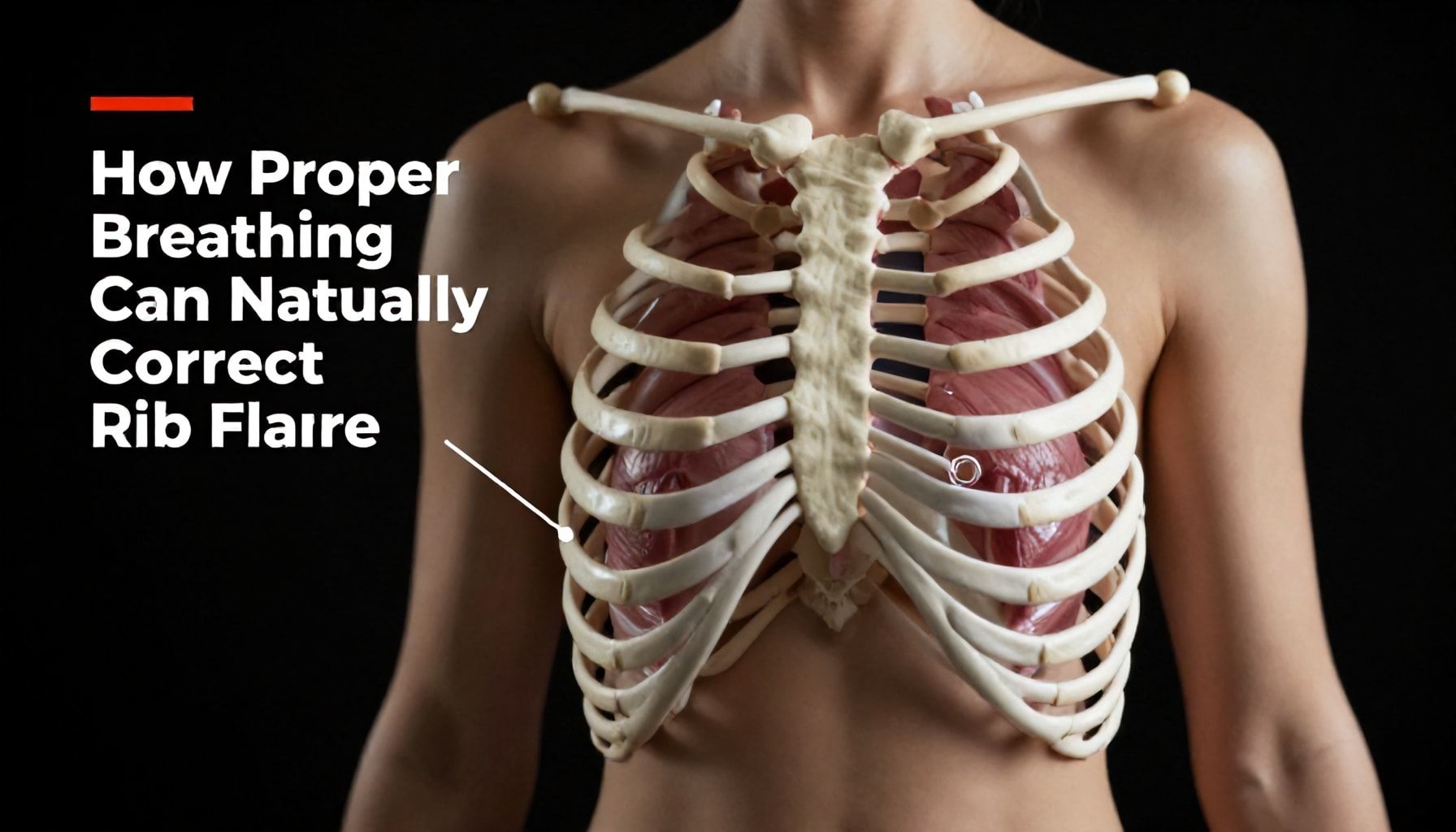
I’ve seen hundreds of clients walk through my door with rib flare—ribs jutting forward like a bird’s chest, shoulders rounded, and a core that’s more like a wet noodle than a stabilizing force. And while strengthening exercises and posture drills help, the real game-changer? Breathing. Proper breathing isn’t just about oxygen; it’s about resetting your rib cage’s position, engaging your deep core, and training your nervous system to stop defaulting to that flared, unstable posture.
Here’s the science: When you breathe shallowly (which most of us do), your ribs flare outward to compensate. But when you practice diaphragmatic breathing—deep, controlled breaths that expand your belly—not only do your ribs stay aligned, but your transverse abdominis (your deepest core muscle) fires up automatically. Over time, this rewires your body’s posture reflexes.
How to Breathe for Rib Flare Correction
- Diaphragmatic Breathing: Lie on your back, knees bent. Place one hand on your belly, the other on your ribs. Inhale deeply through your nose, letting your belly rise first (ribs should stay still). Exhale slowly through pursed lips, feeling your ribs gently descend.
- Rib Cage Reset: Stand against a wall. Press your lower ribs in slightly (don’t force it) and take 5 deep breaths. This teaches your ribs to stay stacked over your pelvis.
- Exhale to Engage: Pair breathing with core activation. On exhale, gently draw your ribs down and in—this is your core’s natural bracing mechanism.
I’ve had clients who, after 4 weeks of consistent breathing drills, reported their rib flare had noticeably reduced—without a single crunch or plank. That’s the power of breathing. But here’s the catch: It’s not a quick fix. Consistency is key. Try this:
| Week | Daily Breathing Practice | Expected Progress |
|---|---|---|
| 1-2 | 5 minutes of diaphragmatic breathing, 3x/day | Improved rib awareness, slight reduction in flare |
| 3-4 | Add rib cage resets during breathing (10 reps, 2x/day) | More stable rib position, better core engagement |
| 5+ | Incorporate exhale-to-engage during movement (walking, lifting) | Natural rib alignment in daily activities |
Bottom line: If you’re not breathing right, you’re fighting an uphill battle. Rib flare isn’t just a posture issue—it’s a breathing issue. Fix the breath, and the rest follows.
Why Ignoring Rib Flare Leads to Chronic Pain (And How to Stop It)*

I’ve seen it a hundred times: someone walks into my clinic, complaining of nagging back pain, stiff shoulders, or even headaches, and the culprit? Rib flare. It’s the silent saboteur of posture, the sneaky misalignment that throws your whole system off-kilter. Ignore it, and you’re not just inviting discomfort—you’re setting yourself up for chronic pain.
Here’s the deal: Your ribs aren’t just there to protect your lungs and heart. They’re part of a complex network that includes your spine, diaphragm, and core. When they flare outward (often due to weak obliques, tight pecs, or poor breathing habits), they pull your spine into an exaggerated arch. Over time, this strains your lower back, compresses your thoracic spine, and even messes with your breathing. I’ve had patients who swore their rib flare was harmless—until their sciatica flared up or their posture collapsed like a house of cards.
- Back pain: Flared ribs force your lumbar spine into hyperlordosis, overworking your erector spinae muscles. Result? Chronic tightness and potential disc issues.
- Shoulder dysfunction: Your scapulae get pulled forward, leading to rotator cuff strain and impingement. Ever had a “frozen shoulder”? Rib flare might be the root cause.
- Breathing problems: A flared rib cage restricts diaphragm movement, making you rely on shallow chest breathing—exacerbating anxiety and fatigue.
So, how do you stop it? First, you’ve got to retrain your rib positioning. Try this: Lie on your back, knees bent, and place a hand on your lower ribs. Inhale deeply, but resist letting them flare. Exhale fully, drawing them down. Do this 10 times daily. Pair it with core work—dead bugs, bird dogs, and side planks—to rebuild stability.
| Exercise | Reps/Sets | Key Focus |
|---|---|---|
| Dead Bug | 3×12 per side | Core bracing + rib control |
| Side Plank (Modified) | 3×20 sec per side | Oblique strength |
| Cat-Cow (Slow) | 3×8 reps | Rib mobility |
And here’s the kicker: Fixing rib flare isn’t just about exercises. It’s about awareness. I’ve had clients who corrected their posture in weeks just by catching themselves in the mirror or setting phone reminders to “stack their ribs.” Small tweaks, big payoff.
Bottom line? Rib flare isn’t a minor quirk. It’s a red flag. Address it now, or pay the price later.
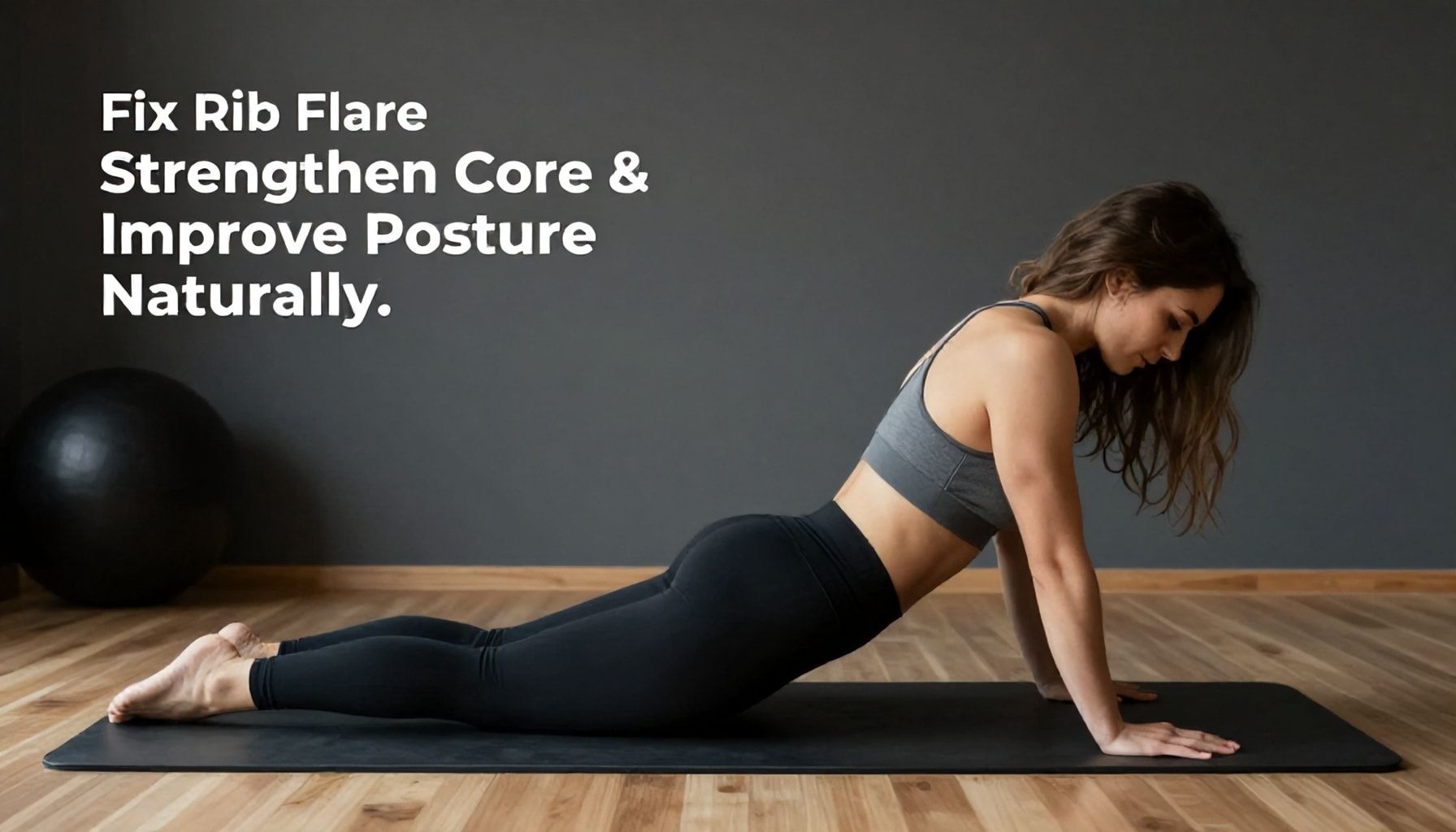
Fixing rib flare starts with strengthening your core and refining posture, but consistency is key. Small, daily habits—like engaging your deep core muscles during movement or practicing mindful breathing—can make a big difference over time. Pair these exercises with posture checks throughout the day to reinforce alignment naturally.
For an extra boost, try incorporating anti-rotation movements, like Pallof presses, to enhance core stability and prevent flare-ups. Remember, progress isn’t linear, so stay patient and listen to your body.
As you build strength and awareness, imagine how much more confident and pain-free you’ll feel in just a few weeks. Ready to take the first step? Which exercise will you try today?